Why celery needs its own buying criteria
Celery is mostly water, but its long structural fibers make it a demanding juicer ingredient. Those strands can wrap around an auger, collect at a pulp outlet, bridge inside a hopper, or mat against a screen. A model that handles apples quickly may still create a frustrating celery routine if its pulp path is difficult to inspect or its screen is awkward to brush.
Judge the complete path from washed stalk to finished cleanup. The meaningful questions are how the model asks you to cut and feed celery, whether pulp continues to exit during an ordinary batch, how easily you can pause and clear buildup, and how many fiber-catching surfaces must be washed. Motor wattage, chute width, and a broad cold-press label do not answer those questions alone.
Our strongest dedicated celery pathway
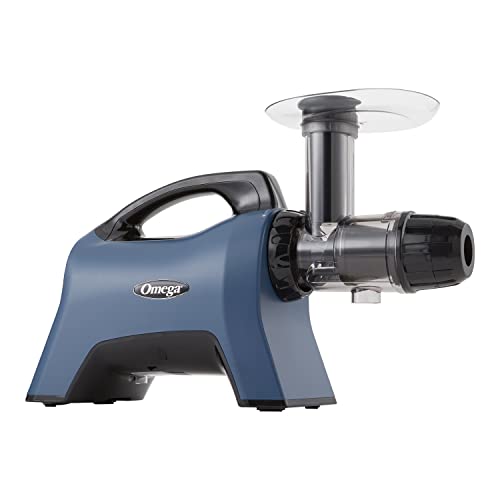
The Omega MM1500BL Celery Juicer and Nutrition System is the clearest specialist in this verified catalog. Its exact Amazon listing identifies a slow masticating system with an adjustable celery end cap and a separate standard produce end cap. That distinction matters: the celery component is intended to manage the resistance of celery pulp, while the standard component preserves a route for other supported ingredients.
Specialization also adds a step. The correct end cap must be selected, installed, adjusted, cleaned, and stored according to the current model manual. A dedicated component is useful for a household that repeatedly juices celery; it is unnecessary complexity for someone who makes a small mixed juice once a week. Confirm the exact MM1500BL configuration, included parts, seller, and current manual before purchase.
Horizontal single augers offer controlled feeding
A horizontal auger places the feed throat over a long extraction path, allowing the user to stage celery pieces and watch pulp leave the front of the machine. The Omega MM1500BL and Omega All-in-One both use this broad format, although only the MM1500BL listing in this catalog includes the dedicated celery end cap. Horizontal bodies need counter length for the motor, feed tray, juice cup, pulp container, and front disassembly.
This layout rewards preparation before power-on. Wash and inspect the stalks, cut them only as the exact manual directs, position both containers, and feed at a pace the auger can accept without force. Horizontal control is valuable when celery and greens dominate, but a shopper who dislikes active feeding may prefer a vertical or batch-hopper workflow.
Ninja is the approachable mixed-produce choice
The Ninja NeverClog JC151 is the practical generalist in the nine-model shortlist. It is already verified for celery within JuicerPress, provides pulp-control choices, and uses a household cold-press workflow that is less specialized than a large horizontal nutrition system or twin-gear machine. It suits shoppers who want celery in rotation with cucumber, apple, carrots, or greens rather than a dedicated celery station.
The tradeoff is more deliberate cutting and loading than a large hopper. Its NeverClog name is a product family name, not permission to overload the feed path or ignore accumulating fiber. Follow the current manual, use the supplied pusher only as directed, and rinse the filters and channels before celery residue dries.
Batch hoppers reduce active loading, not preparation judgment
The Omega Hands-Free and Omega Compact Vertical create different vertical pathways. A larger hopper can reduce repeated hand feeding for compatible prepared ingredients, while a compact vertical body saves counter width. Neither shape turns long stalks into universal whole-feed ingredients. Fibrous pieces can still bridge or twist together, and the exact manual remains the authority for piece size, order, loading, and stall response.
Choose a hopper model when the normal recipe combines celery with other produce and reducing active attention is a named priority. Choose compact vertical when counter width matters more than total height. Measure lid movement, cabinet clearance, bowl removal, juice and pulp containers, sink space, and drying area before assuming a vertical model is automatically small.
Twin gear is a specialist commitment
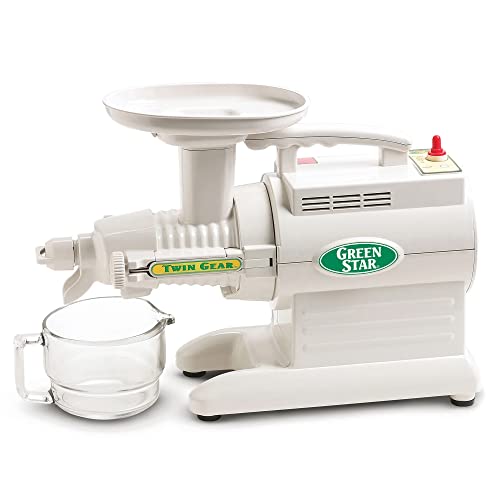
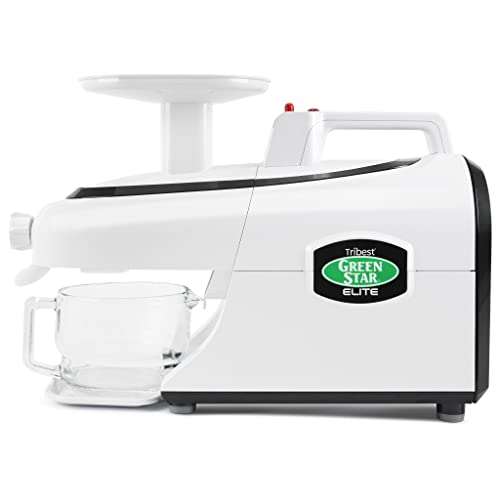
Greenstar Original GS-1000, Elite GSE-5000, Greenstar 5 GS5, and Greenstar Gold GP-E1503 are verified twin-gear pathways that include celery among their supported produce positioning. Two interlocking gears create a narrow, controlled horizontal route, with screens and pulp-pressure components that can be useful for fibrous produce. They also introduce matched gears, alignment, more surfaces, and a more detailed wash.
Choose twin gear when celery shares the weekly basket with leafy greens, wheatgrass, herbs, and roots often enough to justify the process. Do not choose it because two gears sound categorically superior. Compare the model manual, exact included screen and pressure parts, working footprint, assembly sequence, parts support, and the time needed to brush and dry everything after an ordinary batch.
Preparation rules are model-specific
There is no responsible universal instruction to feed whole celery stalks into every cold press. Chute size, auger shape, hopper design, pressure outlet, safety interlock, and manual guidance differ. Wash stalks under running water, remove damaged areas, trim only as appropriate, and cut within the exact model instructions. Do not use soap, detergent, or produce wash on celery; FDA guidance recommends rinsing produce under running water.
If the manual calls for shorter sections, cut across the fibers so one piece cannot wrap through a large portion of the extraction path. Stage a normal batch instead of pressing a tightly packed bundle into the throat. Use only the supplied or approved pusher and never place fingers or utensils into a powered feed opening.
Clogging is a flow problem, not a power contest
A clog often develops gradually: pulp stops exiting, juice flow slows, material rises in the throat, the motor changes sound, or the machine stalls. Stop adding celery at the first sign that output is no longer keeping pace. The correct response depends on the model. Some manuals provide a brief reverse procedure; others require power-off, unplugging, pressure release, and disassembly.
Never force more stalks through to clear a blockage. Extra material increases resistance and can pack the outlet or screen more tightly. Read the jam procedure before the first batch, keep the pulp outlet visible when possible, and stop for repeated stalls, leaks, grinding, unusual odor, heat, or damaged parts.
Compare yield with a repeatable kitchen test
JuicerPress does not publish a universal celery-yield percentage because stalk freshness, trimming, starting weight, machine setup, pressure, screen, feed pace, retained pulp, foam, and measurement method change the result. A thicker glass can also appear to yield more because it includes more suspended pulp. Marketing numbers from different test methods should not be treated as direct comparisons.
For a useful home comparison, weigh similar washed celery, use the correct setup for each model, follow the same preparation standard, collect the finished liquid in the same vessel, and record visible pulp and cleanup time. Repeat across several ordinary batches. The best result balances the amount and texture you prefer with a routine you will actually repeat.
Cleanup should decide the shortlist
Celery fibers cling to screen mesh, pulp outlets, auger grooves, pressure components, and seals. Rinse approved food-contact parts promptly, clear the outlet with the supplied tool or an approved brush, inspect both sides of the screen, and let every channel dry fully before reassembly. Keep the motor base, cord, and electrical connections away from water.
Dishwasher instructions vary even within a brand. Tribest says certain removable parts in Greenstar Elite and Pro families may be dishwasher-safe with stated exceptions, while Original and Gold parts are not. The exact model manual overrides a collection-level summary. Removable never automatically means dishwasher-safe, and a powered base is never a dishwasher part.
Choose by the rest of the weekly basket
A celery specialist makes sense when celery is the repeated job. For mixed juices, compare the second and third ingredients. Loose greens favor controlled auger feeding; dense roots need manageable pieces and patient feed; soft fruit can thicken pulp; citrus preparation depends on the model and rind guidance. A separate standard produce end cap or a simpler all-purpose screen may matter more than maximum celery specialization.
Write down the ordinary recipe, number of servings, preparation limit, cleanup limit, working dimensions, and storage plan. Eliminate any machine that fails a non-negotiable. Then compare the surviving model reviews and current Amazon listings rather than treating every cold press as interchangeable.
Final celery juicer buying checklist
Start with the Omega MM1500BL for a verified dedicated celery system, Ninja JC151 for accessible mixed-produce use, Omega All-in-One for horizontal versatility, a vertical Omega for shape or hopper convenience, or Greenstar for a committed twin-gear station. Confirm exact model number, included caps or screens, current seller, availability, working voltage, manual, parts path, and return terms on the live listing.
Before buying, picture the complete first session: washing, trimming, cutting, staging, feeding, watching the pulp outlet, responding to a slowdown, disassembling, brushing, rinsing, drying, and storing. The best celery juicer is the one whose fiber-management and cleaning routine remains acceptable after the excitement of the first glass.
Sources and further reading
Models relevant to this decision
As an Amazon Associate, we may earn from qualifying purchases.






Frequently asked questions
What type of juicer is best for celery?
A slow single-auger or verified twin-gear juicer is the strongest starting point for frequent celery because it provides a controlled feed and pulp path. The exact model, preparation, cleanup, and other ingredients still determine the best fit.
Does a celery end cap matter?
It can matter for a celery-first routine when the exact model documents that component. The Omega MM1500BL listing includes a dedicated celery end cap and a separate standard produce end cap; install and adjust each only as its manual directs.
Can I put whole celery stalks in a cold press juicer?
Do not assume so. Chute, hopper, auger, and pulp-path designs differ. Follow the exact model manual and cut across long fibers when its preparation guidance requires shorter pieces.
Why does celery clog some juicers?
Long fibers can wrap, mat against a screen, bridge in a hopper, or pack a pulp outlet. Controlled cutting and feeding, watching pulp flow, and prompt cleaning reduce the risk.
How should I compare celery yield?
Use similar washed starting weights, the correct model setup, the same collection vessel, and several ordinary batches. Record texture, visible pulp, retained liquid, and cleanup time instead of relying on an isolated percentage.
Are all celery-juicer parts dishwasher-safe?
No. Dishwasher guidance is part- and model-specific. Check the exact manual, including any rack, temperature, detergent, and hand-wash exclusions.
Final verdict
For best juicer for celery: 9 verified models compared, compare Omega MM1500BL Celery Juicer and Ninja NeverClog JC151 only after the ingredient, working-space, and cleanup requirements pass. The better choice is the model whose documented tradeoff fits the routine you will actually repeat.