Compare five verified Tribest Greenstar twin-gear juicers by gear construction, pressure control, produce fit, assembly, cleaning, replacement support, footprint, and exact model identity.
Know before you buy: The horizontal twin-gear assembly requires deliberate feeding, careful alignment, and more cleaning attention than a simple single-auger machine.
Know before you buy: Professional naming and construction do not by themselves establish restaurant certification or suitability for every commercial setting.
Know before you buy: As a legacy model, it is especially important to confirm the exact current configuration, included accessories, and replacement support before purchase.
Triturating describes the crushing and grinding action created as two gears rotate toward one another. Produce is pulled between those gears, compressed, and directed toward a screen and pulp outlet. That is mechanically different from a typical single-auger juicer, which moves ingredients along one rotating screw. Both belong to the broader slow-juicer family, but the parts, feeding rhythm, pressure control, and cleaning work are not interchangeable.
The mechanism is the first qualification for this collection. A product title that merely says cold press, masticating, slow, or high yield does not establish twin-gear construction. JuicerPress includes only exact Greenstar product families whose live listing and current or archived manufacturer documentation support the two-gear identity. That narrower catalog is more useful than mixing unrelated mechanisms into a large but misleading grid.
Twin gear versus single auger in a real kitchen
Twin gears create multiple contact points and a narrow processing path. That can suit fibrous leaves, grasses, stalks, and dense roots when they are prepared and fed as the manual directs. It also creates more surfaces to align and brush. A single horizontal auger is usually easier to understand at a glance, while a vertical auger or batch hopper can reduce active loading for mixed everyday recipes.
Choose between mechanisms by the routine, not by assuming that more hardware always produces a better drink. A household making frequent green-heavy recipes may value the grip and pressure controls of a Greenstar. Someone who prioritizes a quick apple-carrot batch, a compact footprint, or the fewest screen crevices may be happier with a single-auger or centrifugal format. The linked comparison walks through those tradeoffs without declaring a universal winner.
Who should put a Greenstar on the shortlist
The strongest fit is a shopper who repeats leafy greens, wheatgrass, celery, parsley, cilantro, ginger, turmeric, carrots, or mixed vegetable recipes and is willing to learn a controlled feed pace. Twin-gear ownership makes more sense when the machine can remain accessible, the parts have a dedicated washing and drying area, and the user will consult the exact manual during assembly and pressure adjustment.
It is a weaker fit for a household that wants to drop large pieces into a hopper and walk away, dislikes brushing screens, or needs the smallest possible machine. It can also be unnecessary for occasional citrus-only use. A lever press or electric reamer is more direct for halved citrus, while a wide-hopper cold press may better serve a family that values lower active prep above ingredient-by-ingredient control.
Leafy greens, wheatgrass, and herbs
Small leaves can scatter or form a soft mass when they enter a machine by themselves. Gather manageable bundles, alternate them with compatible firmer or higher-moisture produce when the recipe allows, and let the gears pull each portion before adding more. Wheatgrass should be fed in small amounts rather than compressed into a dense plug. The goal is steady movement, not maximum pressure on the pusher.
Screen buildup changes the process before the pulp bin looks full. Watch juice flow, pulp movement, motor sound, and the resistance at the feed chute. If flow slows or the unit strains, stop and follow the model-specific clearing instructions. Never reach into the feed path or improvise with utensils. The Greenstar families differ in housing, gear construction, screens, and adjustment hardware, so one model's clearing sequence should not be assumed for another.
Celery, ginger, turmeric, carrots, and other roots
Long fibers and dense roots reward preparation. Cut celery and similar stalks to the length specified for the exact feed system, trim damaged material, and keep pieces narrow enough to enter without force. Ginger and turmeric can be very firm or irregular, so use modest pieces and a patient rhythm. Carrots should be fed one manageable section at a time rather than used to push other ingredients through.
Hard produce is not permission to force the gears. Excessive pusher pressure can overload the feed path, pack pulp against the screen, or make disassembly difficult. Alternate textures when appropriate and allow the outlet to clear. If the motor stops, the gears bind, or the housing shifts, turn the machine off and use the manual's reverse, release, or disassembly procedure rather than trying to power through the obstruction.
Understand the Greenstar product families
The Original GS-1000 is the most straightforward entry into the verified Greenstar catalog and uses twin gears with stainless masticating elements. The Elite GSE-5000 family moves to a different gear and pressure-control system and is a balanced place to start for shoppers who want a widely documented current family. The Gold GP-E1503 is an older documented platform that may appeal when its exact listing, included parts, and replacement-part path are confirmed before purchase.
The Pro GS-P502 uses jumbo all-stainless twin gears and a more substantial format, but the word Pro does not prove restaurant certification, continuous-duty approval, or business warranty coverage. The Greenstar 5 GS5 is the newest verified family in this catalog, with all-stainless jumbo twin gears and revised housing and cleaning accessories. Model names that sound similar do not make parts interchangeable; always match the manual and replacement components to the full model number.
Pressure adjustment is an operating control, not a score
Greenstar systems use an outlet or pressure-control arrangement to balance resistance and pulp discharge. More pressure is not automatically better. Too much resistance for the ingredient can slow pulp movement and increase screen loading, while too little may change texture or allow wetter pulp. Begin with the manual's guidance and adjust gradually while observing the actual recipe.
Treat pressure as part of a three-way relationship among produce condition, feed rate, and screen choice. Overripe fruit behaves differently from crisp roots, and a fine screen behaves differently from a coarser accessory. Record the setup that works for recurring recipes instead of changing several variables at once. If a model's pressure hardware is missing, damaged, or difficult to turn, identify the exact replacement rather than substituting a visually similar part.
Screens, knobs, and accessories change the job
A screen separates liquid from pulp, and its openings can hold fine plant fiber even when the visible surface looks clear. Some Greenstar packages include multiple screens or food-processing accessories; others differ by seller bundle or production generation. Confirm the exact box contents on Amazon and against the manufacturer documentation before assigning value to an accessory shown in a photo.
Use each accessory only for the documented task. A blank screen, coarse screen, breadstick knob, pasta piece, or homogenizing setup is not a universal juicing part and may require a different outlet arrangement. The useful buying question is not how many pieces appear in the box, but whether the household will use them and can store, identify, wash, and replace them correctly.
Assembly and gear alignment deserve attention
Twin gears must be installed in the correct orientation and fully seated before the housing is secured. Alignment marks, dots, drive and free gears, and retaining hardware vary by family. If the front housing will not close with normal hand pressure, stop and recheck the sequence. Tightening a latch or knob against misaligned gears can damage parts or make the unit unsafe to run.
A calm dry assembly check prevents many problems. Lay parts in order, inspect seals and mating surfaces, align the correct marks, seat the screen and gears, attach the outlet hardware, and confirm that containers are positioned before powering on. Keep the manual near the station until the sequence is familiar. The companion assembly guide provides a general checklist but never replaces the exact model manual.
Cleaning is the main ownership tradeoff
Two gears, a screen, pressure hardware, a feed housing, outlets, and containers create a more detailed wash than many one-auger systems. Rinse soon after the final batch so fiber does not dry in the mesh or gear valleys. Brush the screen from both sides as directed, clear pulp channels without metal picks, wash only the parts approved for water, and keep the motor base and electrical connections dry.
Dishwasher claims are part-specific and model-specific. Removable does not mean dishwasher-safe. Follow the exact manual for detergent, water temperature, rack placement, soaking limits, and any part that must be hand-washed. Allow every hidden groove and seal area to dry before reassembly or storage. If the cleanup feels unacceptable in an imagined daily routine, choose a simpler mechanism now rather than abandoning an expensive machine later.
Counter space, movement, and batch flow
Greenstar machines use a horizontal footprint with containers in front of the outlet and working room above the chute. Measure the complete station: body length, feed access, pressure-knob reach, juice cup, pulp container, cutting board, disassembly space, sink route, and drying area. A listed product dimension does not capture the space needed to operate and clean it.
These machines are not ideal candidates for frequent lifting from a deep cabinet. A stable accessible counter or sturdy appliance cart can make more sense if the household uses one often. Never infer quietness, duty cycle, or batch capacity from weight or motor appearance. Follow documented run limits and pause when the manual requires it, even when the machine looks substantial.
Current and legacy support should affect the decision
The five product pages represent distinct Greenstar families found through live exact Amazon listings. A live listing does not guarantee that every accessory or replacement component will remain available. Before buying, search the exact model number on the manufacturer parts and manuals pages, then confirm that critical items such as screens, knobs, seals, gears, and containers can be identified for that family.
Legacy support matters most for the Gold and Original platforms and for any marketplace inventory whose packaging may vary by age. Confirm whether the seller is offering a new exact model, what is included, the current return terms, and the warranty that applies to that seller and use. JuicerPress does not present a listing's presence on Amazon as proof of future parts supply or manufacturer coverage.
A practical twin-gear buying checklist
Write down the three ingredients used most, the normal serving count, maximum prep time, acceptable cleanup time, working counter dimensions, storage plan, and whether non-juice accessories matter. Next, choose between entry, balanced current, all-stainless substantial, newer-generation, and legacy pathways. Eliminate any model whose cleaning or support path cannot be confirmed before comparing secondary accessories.
On Amazon, verify the full model number, voltage, country suitability, seller, condition, color only when it changes the package, included screens and knobs, current availability, current price, and return terms. The catalog intentionally excludes 220-volt listings marked as unsuitable for normal U.S. use, duplicate colors, and third-party accessory bundles. A smaller exact shortlist is safer than a crowded collection of look-alike listings.
Confirm true twin-gear construction and the full model number
Match the machine to recurring greens, stalks, or roots
Accept the assembly, brushing, drying, and storage routine
Verify voltage, included accessories, seller, and current terms
Check exact-family manuals and replacement-part identification
Choose a model pathway
Twin-Gear & Triturating Juicers separates the shortlist into 5 practical routes: straightforward twin-gear entry, balanced current family, all-stainless substantial format, newest verified greenstar pathway, documented legacy family. Start with the route that matches the dominant routine, then read its exact model review before opening the retailer listing.
Straightforward twin-gear entry
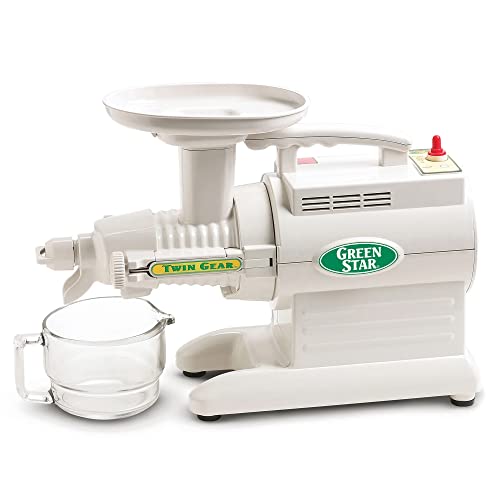
Start with the Greenstar Original GS-1000 when you want the simplest verified route into the mechanism and can confirm the exact current package and parts path.
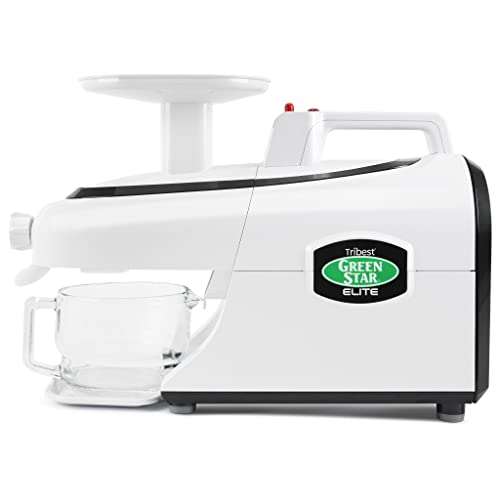
Choose the Greenstar Elite GSE-5000 when a well-documented 110-RPM family, stainless twin gears, pressure adjustment, and a broad produce routine are the center of the decision.
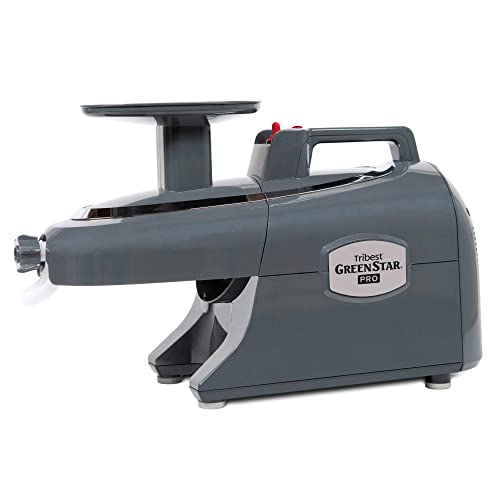
Consider the Greenstar Pro GS-P502 for its jumbo all-stainless twin gears and substantial format. Verify operating limits, warranty, certification, and local requirements separately before any business use.
Look at the Greenstar 5 GS5 when the revised current platform, all-stainless jumbo gears, and included cleaning accessories matter enough to justify comparing its exact package with Elite and Pro.
Treat the Greenstar Gold GP-E1503 as a legacy-family option. Confirm listing condition, box contents, exact-family parts, current warranty, and return terms before purchase.
Choose a twin-gear juicer when greens, wheatgrass, celery, herbs, and firm roots are central enough to justify controlled feeding and a detailed cleaning routine. The GS-1000 is the straightforward entry, the Elite GSE-5000 the balanced current family, the Pro GS-P502 the substantial all-stainless route, the GS5 the newest verified platform, and the Gold GP-E1503 a legacy option that demands extra parts and package checks. If lower prep, fewer crevices, compact storage, or citrus-only use matters more, a single-auger, wide-hopper, centrifugal, or dedicated citrus machine may be the better decision.
Use the Juicer Finder to test the ingredient, routine, space, and budget decision before purchasing.
Frequently asked questions
Is every masticating juicer a twin-gear juicer?
No. Many masticating juicers use one auger. A twin-gear or triturating model has two closely meshing gears, so JuicerPress verifies the mechanism rather than relying on the broad slow-juicer label.
Are twin-gear juicers best for leafy greens?
They can be a strong fit for recurring greens, wheatgrass, herbs, celery, and roots, but preparation, feeding, screen choice, pressure, cleanup tolerance, and the exact model still matter. A simpler juicer may be better for a different routine.
Why are there only five products in this collection?
They are five distinct Greenstar families with exact live Amazon destinations and supporting manufacturer documentation. Duplicate colors, third-party bundles, unsuitable-voltage listings, and products without verified twin-gear construction are intentionally excluded.
Is the Greenstar Pro certified for restaurant use?
The model name and construction do not prove restaurant certification, continuous-duty approval, business warranty coverage, or local acceptance. Verify the exact intended use and required approvals independently before commercial operation.
Can Greenstar parts be used across every model?
Do not assume so. Original, Gold, Elite, Pro, and Greenstar 5 are different families. Match manuals and replacement parts to the full model number and confirm compatibility with the manufacturer or seller.
Are Greenstar parts dishwasher-safe?
Only when the exact model manual says so for that specific part. Removable does not mean dishwasher-safe; verify water temperature, rack placement, hand-wash exclusions, and cleaning methods before using a dishwasher.