The mechanism difference is literal
A single-auger juicer moves produce with one screw-shaped component toward a screen and pulp outlet. The auger can sit horizontally or vertically, and some vertical models add a large batch hopper. A twin-gear or triturating juicer uses two matched gears that rotate together and work across a narrow horizontal extraction path. The gear pair, screen, housing, and outlet pressure function as one system.
That physical difference changes preparation, feeding, assembly, and cleanup. It does not create a universal quality ranking. A twin-gear machine can be a strong specialist for a committed greens routine, while a single auger can be the smarter everyday purchase for a household that values quick setup or low-prep hopper loading. Compare the complete routine, not the number of gears alone.
Why the word triturating causes confusion
Triturating means crushing or grinding, and shoppers commonly encounter it beside twin gear. Retailers also place cold press, slow juicer, and masticating in the same titles. Those broader terms overlap across many mechanisms, but true twin gear requires two interlocking gears. One auger with two stages, two screens, or a dual-feed opening is not automatically a twin-gear machine.
Look at the exact model title, manufacturer documentation, parts diagram, and gear set. The five verified models in this guide are all Tribest Greenstar products identified by both Amazon and Tribest as twin gear. JuicerPress does not place ordinary Omega, Ninja, or wide-hopper cold press models in the twin-gear collection merely because they also use slow extraction.
Produce fit: greens and fibers make the best case
Tribest documents Greenstar models for produce that includes leafy greens, wheatgrass, celery, roots, and mixed fruits and vegetables, with exact coverage varying by model and manual. The matched gears create a controlled route for thin leaves, fibrous stalks, and dense pieces. That is the strongest reason to investigate the category—not an unsupported promise that two gears always make more juice.
A single horizontal auger can also be an excellent greens machine, and a vertical auger can handle mixed recipes with a more compact width. Write the weekly ingredient list and circle the foods that are genuinely difficult in the current routine. Twin gear becomes compelling when its mechanism solves those repeated ingredients often enough to justify extra setup and cleaning.
Feeding feels more deliberate with twin gear
A narrow horizontal throat and two geared surfaces create a different rhythm from dropping a prepared batch into a hopper. Ingredients must be washed, inspected, cut within the manual, staged, and fed with the approved pusher. Dense roots, stringy stalks, loose greens, and soft fruit can each require a different pace or outlet-pressure approach. Never force material between the gears.
Single-auger machines provide more shape choices. A horizontal auger preserves deliberate piece-by-piece control, a compact vertical model saves width, and a batch hopper can reduce active loading. If chopping and repeated feeding are the main barriers, a wide-hopper single auger may produce more real household use even when twin gear appears more specialized on paper.
Pressure control is useful and adds a decision
Greenstar systems use an outlet pressure mechanism to manage resistance as pulp leaves the housing. Firmer adjustment can interact differently with dense or fibrous ingredients than a looser setting used for softer material, but the correct setup belongs to the exact manual. More pressure is not automatically more yield, and excessive resistance is not a shortcut to better juice.
Many single-auger household machines reduce or eliminate that manual decision. Their pulp outlet and screen still need attention, but the user may have fewer adjustments to make. Shoppers who enjoy dialing in ingredients can value the Greenstar approach. Shoppers who want one repeatable setting may prefer a simpler auger even if it offers less direct pressure control.
Assembly is the first ownership test
A twin-gear system asks the user to distinguish the drive and free-wheel gears, align their marks or orientation as shown, seat them into the body, place the correct screen or blank, fit the housing, and attach the pressure outlet and containers. Exact order and locking steps vary by family. Dry practice before the first recipe prevents a rushed, pulp-covered learning session.
A single auger usually has one main extraction component, although vertical bowls, seals, wipers, screens, and caps can still make assembly detailed. Count not only pieces but alignment points and places that can be installed incorrectly. The better mechanism is the one the household can assemble correctly every time without skipping inspection.
Cleanup is the clearest twin-gear tradeoff
Twin gears have teeth, recesses, ends, and a close mating surface. The screen wraps around the extraction area, while the housing, pressure outlet, feed throat, and pulp path collect residue. Prompt rinsing and the approved screen tool or brush matter because leafy and celery fibers become stubborn after drying. Both gears must be cleaned and kept as a matched model-specific set.
A single auger can be easier when it uses fewer aligned pieces and an accessible screen, but large hopper bowls and wiper assemblies can also claim sink space. Compare the actual sequence: disassemble, carry, clear, brush, inspect, rinse, dry, and reassemble. A twin-gear purchase makes sense only when the ingredient advantage survives that full routine.
Counter shape and storage favor single auger
All five verified Greenstar models use a substantial horizontal form. They need counter length for the motor body, feed housing, pressure outlet, juice vessel, and pulp container, plus front or side room for disassembly. Gears and screens need protected drying and storage. Measure the complete working station rather than the closed appliance.
Single-auger shoppers can choose a narrow vertical machine, a compact one-to-two-serving design, a horizontal nutrition system, or a large batch hopper. That variety often makes single auger the easier small-kitchen choice. Twin gear should earn permanent or frequently accessible space through repeated produce performance, not become a heavy appliance stored in a difficult cabinet.
Texture and apparent yield need careful language
Gear geometry, screen choice, outlet pressure, ingredient condition, preparation, feed pace, and pulp handling all influence the finished glass. A fine screen can create a different texture from a coarse screen. Fresh greens behave differently from wilted leaves; crisp celery differs from dehydrated stalks; soft fruit can create thicker material than dense roots.
Do not assign a universal yield percentage or storage promise to every twin-gear batch. Compare several ordinary sessions using similar produce weights and preparation, then consider texture and retained pulp. A single auger may create a glass the household prefers with less work. The useful result is the one the user will repeat and clean up after.
Noise and speed numbers do not choose the winner
Twin-gear and single-auger machines both belong to slow-extraction shopping, but RPM values are not interchangeable performance scores. Gear diameter, reduction, screen, pressure, motor behavior, and produce resistance change the experience. Tribest currently identifies 110 RPM for the Greenstar Elite family; that number does not prove it is better or worse than a lower-RPM single auger.
Both formats may sound calmer than a high-speed centrifugal basket, but JuicerPress does not call a model silent without verified evidence. Listen for changes from normal operation and stop for grinding, binding, unusual odor, heat, leaks, damage, or repeated stalls. Use the manual rather than treating a slow speed as permission to run indefinitely.
Parts support matters more with matched gears
Twin gears, screens, housings, pressure parts, bushings, pushers, and containers can be specific to the Original, Gold, Elite, Pro, or Greenstar 5 family. Tribest currently lists manuals and separate parts collections for several families, which gives shoppers a route to investigate. Availability and compatibility of any exact part still need verification at the time it is needed.
Do not mix pieces because two machines share the Greenstar name or look similar. Keep the model number and manual, store the gears as a pair, and use manufacturer-confirmed parts. Single-auger machines also need support, but the matched extraction pair raises the cost of assuming compatibility. An older model is attractive only when its documentation and ownership path remain acceptable.
The five verified Greenstar positions
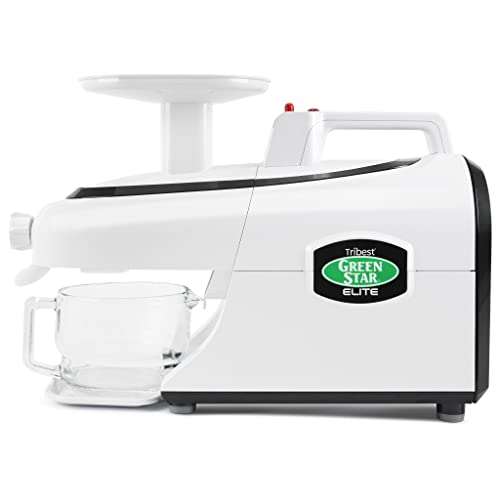
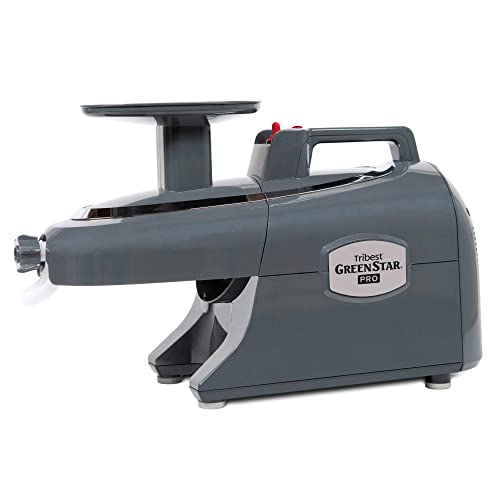
Greenstar Original GS-1000 is the entry pathway into the verified family. Greenstar Elite GSE-5000 is the balanced current comparison with stainless-steel twin gears and documented 110-RPM operation. Greenstar Pro GS-P502 emphasizes all-stainless jumbo gears and broad produce support, while Greenstar 5 GS5 is the newer-generation option whose listing highlights easy-clean housing, a screen tool, and a glass pitcher.
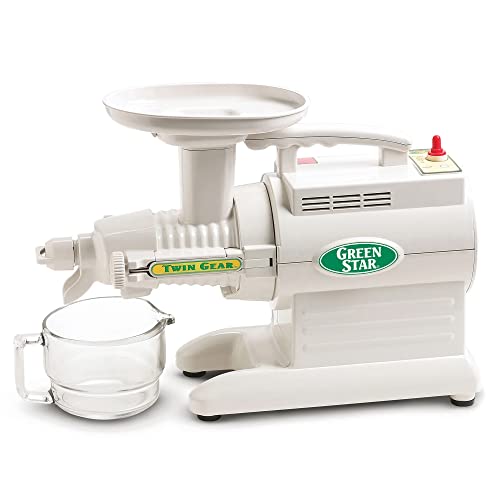
Greenstar Gold GP-E1503 is the legacy deluxe option. It belongs only after the buyer confirms exact configuration, voltage, accessories, manual, and replacement support. These roles do not claim laboratory superiority or firsthand testing. They organize five exact live Amazon products by the clearest verified distinction and ownership question.
Choose single auger when convenience is the feature
A single auger is usually the better starting point for beginners, smaller kitchens, one or two servings, households that dislike careful alignment, or anyone prioritizing a large self-feeding hopper. Omega All-in-One offers horizontal single-auger control, while Ninja and other vertical models create different cleanup and footprint choices. The simpler machine is not a compromise when it makes the routine happen.
Choose twin gear after the weekly ingredient list, parts access, assembly practice, counter plan, and cleanup tolerance all point in the same direction. If the decision rests only on premium price, two versus one, or a claim that more gears must be better, keep comparing. Mechanism counts only when it changes a repeated job.
Final twin-gear versus single-auger checklist
Choose twin gear for a committed horizontal workflow built around greens, wheatgrass, celery, roots, and controlled feeding. Confirm exact model, two-gear construction, voltage, screen set, pressure parts, operating guidance, current accessories, parts path, working length, sink space, and the cleaning sequence. Start with Greenstar Original or Elite, then justify Pro, GS5, or Gold through a specific feature or support need.
Choose single auger for simpler assembly, more footprint choices, batch-hopper convenience, or a faster everyday cleanup. Read the product reviews on both sides, return to the Twin-Gear collection and Masticating hub, and use the Juicer Finder to pressure-test ingredients, space, frequency, and budget before opening the verified Amazon listings.
Recommended starting points
These products were retrieved through our connected Amazon catalog for JuicerPress.net. We compare them by mechanism and shopping fit and do not display prices because availability and pricing can change.
As an Amazon Associate, we may earn from qualifying purchases.


Frequently asked questions
Is a twin-gear juicer the same as a masticating juicer?
Twin gear is one masticating format. It uses two interlocking gears; many masticating and cold press juicers use one auger instead.
Are twin-gear juicers better for leafy greens?
They are a strong greens-focused option, but a capable single horizontal auger can also fit. Compare produce frequency, feeding, screen and pressure control, cleanup, space, and support.
Why are twin-gear juicers harder to clean?
The matched gears, screen, housing, pressure outlet, and narrow pulp path create more surfaces and alignment points than many single-auger systems.
What does triturating mean in a juicer?
It refers to crushing or grinding. In this shopping category it is commonly used for machines with two interlocking extraction gears.
Which Greenstar model should a first twin-gear buyer compare first?
Start with the Original GS-1000 and Elite GSE-5000, then justify the Pro, GS5, or legacy Gold through a specific construction, workflow, or support need.
Final verdict
Choose a twin-gear juicer when leafy greens, wheatgrass, celery, roots, and deliberate pressure control justify a large horizontal machine with more alignment and cleaning work. Choose a single-auger cold press when simpler assembly, fewer food-contact parts, vertical or batch-hopper options, and a faster everyday routine matter more. Twin gear describes two interlocking extraction gears; it is not a synonym for every masticating or cold press juicer. Eliminate the wrong mechanism first, verify the model-specific operating guidance, and use the Juicer Finder or related collection hubs to compare the strongest remaining options.