Compare fourteen current and verified legacy centrifugal pathways by firm-produce speed, feed-chute workflow, basket cleaning, pulp capacity, noise, counter space, and normal serving size.
Know before you buy: This 12,500-RPM centrifugal machine prioritizes speed; it is not a slow juicer and its stainless-steel filter still needs prompt cleaning.
Know before you buy: Its compact body and modest serving scale trade the larger pitchers, dual speeds, and pulp capacity of Hamilton Beach's bigger extractors for easier storage.
Know before you buy: Its 17.2-inch listed height and 16.7-inch depth create the largest household workstation here, and Professional branding does not establish commercial certification.
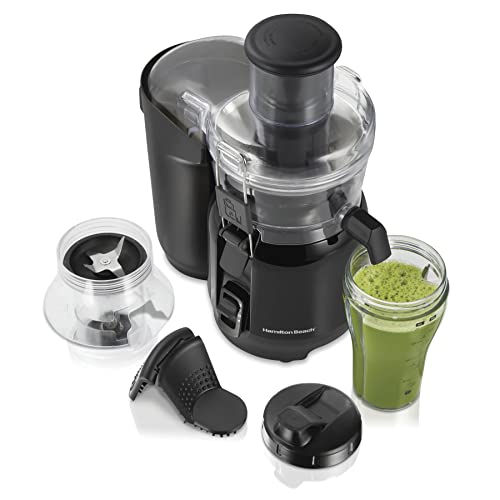
Know before you buy: Its second blending stage adds a jar, blade area, lid, controls, and cleaning work that are unnecessary for shoppers who only want separated juice.
Know before you buy: Cuisinart labels the CJE-500 discontinued, so the live Amazon offer should be checked for exact condition, seller, included parts, and support before purchase.
Know before you buy: The die-cast body, large vessels, basket, and 16.46-inch listed height create a substantial workstation and a larger cleanup than compact or citrus models.
Know before you buy: Cuisinart labels the BJC-550 discontinued, and its two processing attachments add parts and changeovers that are unnecessary for a juice-only routine.
A centrifugal juicer feeds produce onto a rapidly rotating cutting disc and mesh basket. The disc shreds the ingredient, centrifugal force moves liquid through the filter, and pulp travels into a separate area or container. That physical path favors speed: properly prepared firm produce can move from chute to glass with less active waiting than a slow auger workflow.
The same mechanism creates its tradeoffs. The basket and motor are audible, the finished glass may carry more foam, and light greens or long fibers do not always follow the path as predictably as apples or carrots. The useful question is not whether fast is better. It is whether a fast, firm-produce routine solves the job the household repeats often enough to justify the basket, pulp bin, noise, and immediate cleanup.
Firm produce is the natural starting point
Apples, carrots, beets, cucumber, and similarly structured produce give the cutting disc material it can shred consistently. A wide feed opening can reduce repetitive knife work, while a suitable pulp container lets a multi-serving batch continue without frequent stops. Hard does not mean indestructible: inspect every item, remove stickers, pits, stones, hard stems, and excluded peel, and cut pieces within the exact model guidance.
Dense roots still deserve controlled feeding. Do not force a carrot, beet, ginger piece, or any other ingredient through a stalled path. Use the supplied pusher exactly as instructed and keep hands and utensils out of the chute. If firm produce is only a supporting ingredient in a recipe dominated by celery, herbs, or leafy greens, compare the Masticating Juicers hub before committing to speed.
Soft fruit, greens, and fibers need realistic expectations
Ripe berries, tomatoes, peaches, and other soft ingredients can create thick pulp or move through a fast basket differently from firm produce. Leafy greens are light enough to move around the chamber without sustained pressure, and long celery fibers can collect if preparation or feed pace is poor. A lower-speed setting on an exact model may help with approved softer ingredients, but it does not turn the basket into an auger.
Build the shortlist around the ingredient that occupies most of the weekly basket. A centrifugal machine can support a mixed recipe, and manufacturer instructions may approve a broad produce range, but shoppers who primarily juice greens, celery, herbs, or small dense-root shots should compare a slow auger. Choosing the mechanism for a real recipe is more reliable than treating all-produce language as identical performance across every texture.
Feed-chute width is a preparation decision
A broad chute can reduce chopping, particularly for round apples and larger pieces of firm produce that the manual permits. It does not eliminate washing, inspection, pitting, trimming, or model-specific cutting. Awkward shapes may still need to be shortened, and forcing an oversize item defeats the safety and convenience the wider opening is meant to provide.
Compare one normal recipe item by item. Record the pieces required for the compact machine, the everyday machine, and the largest chute. Then add the counter and wash space required by each. A larger opening earns its place when preparation is the repeated obstacle and the larger body remains manageable. If cleanup or storage is the real obstacle, the widest chute can solve the wrong problem.
One speed or two speeds should match the ingredient plan
Simple one-control machines reduce decisions and can suit a repeatable firm-produce routine. Two-speed controls give the shopper a manufacturer-defined option for different ingredient textures. The correct setting belongs to the exact manual; speed labels are not permission to improvise with excluded ingredients or to push material faster than it can clear.
Motor wattage and maximum speed are incomplete buying shortcuts. Basket design, chute, pulp routing, container placement, assembly locks, feed technique, and screen cleanliness all affect the session. Choose the control layout that supports the recipe without adding complexity the household will ignore. Then confirm the exact current model because similar Juice Fountain or Big Mouth names can represent different capacities and control schemes.
Foam and texture are ownership tradeoffs, not health verdicts
Fast shredding and separation can produce visible froth, and some models pair the juice vessel with a froth-control feature. Ingredient condition, feeding pace, basket cleanliness, and pouring also affect the glass. Foam is not a reason to make unsupported claims about the value or safety of the juice; it is a texture and serving preference to consider alongside speed.
JuicerPress does not promise a fixed yield, nutrient level, or storage life from either mechanism. Produce freshness, ripeness, water content, recipe composition, and the amount of fine pulp that reaches the glass all change apparent results. Make only the quantity that fits the household's safe handling plan, follow authoritative food-storage guidance, and compare machines by the routine they make practical rather than a marketing promise.
Basket cleaning is the decisive maintenance task
The cutting disc and fine mesh basket do the separation work and capture pulp. Rinsing before residue dries makes the biggest difference. Use the supplied or approved brush as directed, inspect the mesh from both sides, clear pulp from approved removable channels, and let parts dry completely before reassembly. Keep the powered base dry.
Dishwasher-safe language is model- and part-specific. A removable basket may still require brushing, and a dishwasher-safe pulp bin does not make the motor base washable. Before buying, picture the lid, basket, bowl, pusher, pulp container, and juice vessel in the actual sink and drying area. A fast juicer whose basket feels burdensome after every glass will not deliver a fast complete routine.
Noise and stability belong in the shortlist
A high-speed cutting basket is normally a more noticeable kitchen sound than a slow auger. Ingredient hardness, assembly, surface stability, and normal motor behavior affect the experience, so JuicerPress does not label any model silent without verified evidence. Early mornings, apartments, sleeping family members, and nearby workspaces can make the noise window a non-negotiable.
Place the machine on the stable surface required by its instructions and confirm every locking arm, lid, basket, and container is correctly seated before operation. Stop for unfamiliar grinding, repeated vibration, electrical odor, leaking near the base, damaged parts, or a safety lock that does not engage. Speed is useful only inside a correctly assembled, stable workflow.
Choose compact, everyday, or batch scale
A compact centrifugal juicer favors smaller counters, easier storage, and one or two fresh servings, but an integrated or smaller pulp area can require more attention during a larger session. An everyday standard machine balances chute, controls, containers, and working footprint. A batch-oriented design adds capacity and loading convenience while asking for more counter, sink, and drying space.
Measure stored width and depth, operating height, locking-arm movement, chute access, juice-vessel clearance, pulp-bin removal, cutting-board space, outlet access, and the path to the sink. Capacity should match an ordinary weekday rather than an occasional party. Buying excess capacity can increase washing and storage friction; buying too little can add interruptions that erase the speed advantage.
Compare value without publishing a stale price
The value model is the one that handles the main produce, fits the station, and has a basket the owner will clean immediately. A compact body, a second speed, a wider chute, or a larger pulp bin is worth more only when it removes a repeated obstacle. A premium position does not prove quieter operation, universal ingredient performance, or better fit.
Amazon sellers, configurations, availability, and prices change, so JuicerPress does not place static prices in the buying guide. Read the internal model review for the workflow, then open the exact verified Amazon destination to confirm the model number, included pieces, current seller, availability, price, and return terms. Similar product-family names make exact identity especially important in this category.
Use a centrifugal-juicer buying worksheet
Write down the primary produce, two supporting ingredients, servings, preferred texture, maximum chopping time, acceptable noise window, cleanup limit, working dimensions, storage plan, and whether a large pulp bin will change the normal batch. Eliminate any model that fails one of those boundaries before comparing secondary features.
Next, inspect the exact model review and manufacturer instructions. Confirm feed preparation, speed selection, basket access, locking system, pulp capacity, containers, operating limits, and approved washing. Use the Juicer Finder to test whether speed remains the correct priority. A shortlist is useful only when it explains what each model does better and which tradeoff would send the shopper to a slow auger or dedicated citrus press instead.
Firm-produce frequency and normal serving count
Chute size compared with actual preparation
One-speed simplicity or model-specific two-speed control
Basket access, pulp capacity, sink fit, and drying space
Noise window, operating footprint, and storage
Exact model, included parts, seller, and current terms
Choose a model pathway
Centrifugal Juicers separates the shortlist into 3 practical routes: fast everyday firm-produce routines, compact counters and smaller servings, wide-chute and larger-batch workflow. Start with the route that matches the dominant routine, then read its exact model review before opening the retailer listing.
Fast everyday firm-produce routines
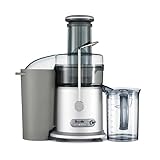
Start here for apples, carrots, beets, and straightforward fresh servings. Compare the Breville's two-speed control and standard format with Hamilton Beach's value-focused three-inch-chute pathway, then read both model reviews before choosing.
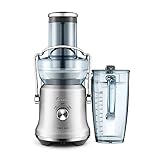
Choose the compact Breville pathway when storage and counter footprint matter more than the largest pulp capacity or broadest batch workflow. Confirm full operating height and sink space, not only the base dimensions.
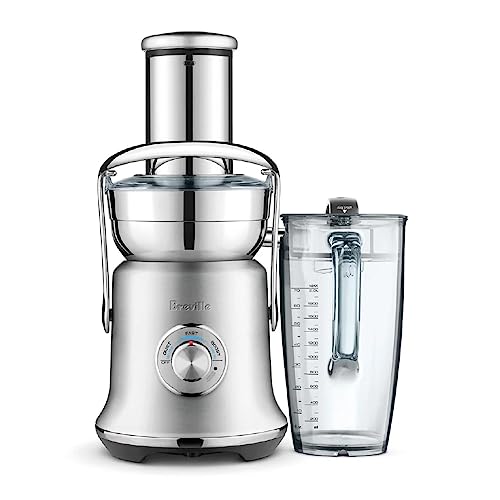
Use the Cold Plus pathway when a larger chute and batch-oriented capacity remove meaningful prep and interruption. The word Cold in the model name does not make this an auger juicer; read the review for the centrifugal workflow and larger footprint.
A centrifugal juicer is strongest when fast firm-produce juice is the repeatable job. Choose compact, everyday, or batch scale for a specific reason; verify chute preparation, speed controls, basket access, pulp capacity, noise, operating space, and exact model identity; then confirm the current Amazon listing before buying.
Use the Juicer Finder to test the ingredient, routine, space, and budget decision before purchasing.
Frequently asked questions
What is a centrifugal juicer best for?
It is a practical match for fast fresh juice from firm, high-moisture produce such as apples, carrots, beets, and cucumber. Recipe mix, serving size, and cleanup still determine the best exact model.
Are centrifugal juicers good for leafy greens?
They may process approved greens, but light leaves generally have a less controlled path than in an auger machine. Frequent greens-focused shoppers should compare masticating juicers.
Are centrifugal juicers hard to clean?
The fine cutting basket is the key task. Prompt rinsing, an appropriate brush, accessible mesh, manageable containers, and correct reassembly determine whether the complete routine feels easy.
Do centrifugal juicers make foamy juice?
Fast shredding can create more visible froth, though the amount varies with produce, feeding, basket condition, and the exact juice vessel. Treat foam as a texture preference rather than a health verdict.
Does a wide chute mean no cutting is required?
No. Every ingredient still needs inspection and model-specific preparation. Pits, stones, stickers, excluded peel, fibers, awkward shapes, and pieces outside the manual guidance require attention.