Begin with an evidence hierarchy
The strongest claim would be a comparable standardized acoustic test for each exact model, performed under the same load, position, distance, room, and measurement method. That evidence is not available across this shortlist. Next is an exact manufacturer's sound description, followed by documented construction and speed facts that help explain behavior without pretending to quantify loudness. User impressions can help form questions but should not become product specifications.
For these products, Ninja supplies exact JC151 documentation for a low-speed auger, controls, filters, and dimensions, but no current quiet claim. Omega and Tribest supply useful mechanism and RPM facts. Zulay documents a manual press requiring no electricity or batteries. Each fact answers a different question. Keeping them separate prevents a product with an attractive low RPM from being promoted as an acoustic winner without supporting data.
RPM is rotational speed, not sound pressure
RPM reports revolutions per minute for a rotating component. An 80-RPM Omega auger, a 110-RPM Greenstar Elite, and the U.S. 120-RPM Greenstar 5 all operate differently from a high-speed centrifugal basket. That helps explain feeding pace, ingredient travel, and mechanism. It does not measure sound pressure, pitch, tonal character, vibration, enclosure damping, or what a person hears through a wall.
Two products can share an RPM while using different motors, gears, housings, feet, screens, and load behavior. One recipe can also change the sound as harder pieces enter. Do not multiply, divide, or rank RPM to invent decibels. Use the number within a mechanism comparison and require direct sound evidence for a sound claim.
Wattage does not answer the quiet question
Motor wattage is commonly presented as if more power must mean more noise or less power must mean a calmer machine. It is not an acoustic rating. Electrical input or motor specification does not tell you enclosure design, efficiency, control behavior, load, gear reduction, component fit, resonance, or operating duration. A watt figure may matter to electrical and performance context, but it cannot substitute for measured sound evidence.
Compare the exact model's intended ingredients and operating limits. A correctly matched machine processing manageable pieces may maintain a more consistent routine than an under-suited product being forced through dense material. Never use a power number to justify overfeeding or continuous operation beyond the manual. The quietest-looking specification is worthless when it produces stalls or extends the session.
Single-auger motors: controlled but not acoustically identical
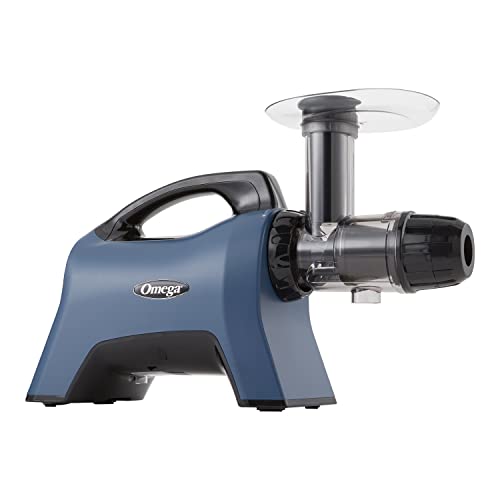
Ninja JC151, Omega All-in-One, and Omega MM1500BL all use slow extraction, yet their orientations, controls, housings, screens, outlets, and product purposes differ. Ninja documents that the exact JC151 auger rotates at low speeds. The Omega records identify 80-RPM horizontal operation. None provides a comparable decibel result or exact current quiet claim, so these are mechanism facts rather than acoustic proof.
A single auger can create motor hum, gear tone, produce impacts, screen friction, and vibration. Horizontal formats add separate juice and pulp vessels that should be aligned without touching the housing. Follow assembly and feeding instructions because poor fit, trapped material, or force can introduce abnormal sound. Do not extend a general slow-juicer impression into a claim for the entire category.
Twin gears add specialization and more interfaces
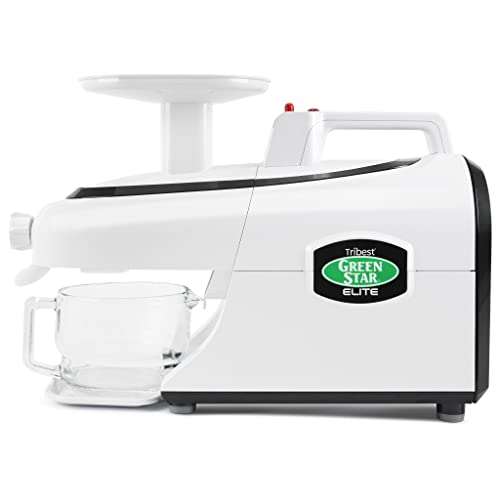
Greenstar Elite GSE-5000 and Greenstar 5 GS5 use two interlocking gears. Tribest lists 110 RPM for the Elite, while the GS5 specification table lists 120 RPM at 60 Hz and 100 RPM at 50 Hz. That twin-gear route supports a deliberate workflow for greens, wheatgrass, celery, roots, and mixed produce. It also creates additional interfaces: two gears, screens, housings, pressure components, locks, and containers. Those parts must be selected and assembled according to the exact manual.
The speed facts help distinguish these systems from a centrifugal basket and the 80-RPM Omega augers. They do not prove either Greenstar is louder or quieter. Choose twin gear for its ingredient and extraction workflow, then judge whether setup, run duration, washing, and reassembly fit the quiet-use window. A specialized mechanism should not be purchased on an inferred acoustic advantage.
Centrifugal baskets exchange pace for a different sound profile
A centrifugal juicer uses a rapidly spinning basket and cutting surface rather than a slow auger or twin-gear press. This can make firm-produce extraction fast and practical, especially when a wider chute reduces cutting. The mechanism also has a different operating sound and can make ingredient impacts more abrupt. It is not automatically the wrong choice for a noise-sensitive household because a short session may matter more than a longer slow one.
Compare total active time, recipe, cleanup, and time of day. If apples and carrots dominate and the machine will run briefly at an acceptable hour, visit the Centrifugal Juicers collection. If greens, celery, early-morning use, or exact quiet evidence leads, start with the Quiet Juicers shortlist. Mechanism should explain tradeoffs rather than become a moral ranking.
Manual presses remove the motor, not all sound
Zulay's cast-iron press requires no electricity or batteries. There is no motor speed, gear whine, power cord, or electrical run time to compare. Pressure comes from the user's controlled lever movement. This is the clearest mechanical distinction in the cluster and can be valuable in an early-morning citrus station.
The frame, linkage, cone, strainer, fruit, and vessel still interact. The press can shift or knock if the base is not stable, the cup does not fit, or the handle is used abruptly. It is also an ingredient specialist, not an all-produce machine. Treat motor-free as an accurate narrow advantage, never as permission to call the whole process soundless or to send carrots, greens, or celery through an unsuitable press.
Vibration follows the complete physical path
Sound can travel from a motor or gear train into the housing, feet, counter, cabinet, wall, nearby objects, and containers. A loose pulp bin, juice cup touching the body, cord tapping a cabinet, or unstable component can create a rattle independent of normal motor operation. The same exact juicer may be perceived differently on two counters because the supporting structures differ.
Use only a stable, level, dry operating surface with the clearance required by the manual. Remove loose neighboring items and align vessels correctly. Do not block ventilation or create instability with improvised foam, towels, or folded pads. If severe vibration begins, stop safely and inspect permitted assembly points. Vibration control begins with correct installation, not a speculative accessory.
Pitch and duration matter beside loudness
A steady low mechanical sound, a higher gear tone, intermittent produce knocks, and a brief fast-basket sound can be perceived differently even without a large change in a meter reading. People also respond differently to tonal or repetitive sound. A published single number, if one existed, would still need test conditions and would not fully explain whether the routine is acceptable beside a bedroom or during a call.
Time the complete session: active cutting, loading, extraction, reverse use, container swaps, and required cleanup. A lower-intensity machine operated for a long batch can be more disruptive than a short higher-speed session. The correct comparison is mechanism plus duration plus room, not a single marketing adjective.
Load behavior reveals whether the machine fits
A well-matched juicer should accept properly prepared ingredients at the documented pace without repeated force or stalling. Dense roots, irregular hard fruit, long fibers, and soft pulp can change load and sound. Prepare exact model-approved pieces, keep the pulp route clear, and observe juice and pulp flow. New strain sounds are information to slow down or stop, not a challenge to push harder.
Repeated reverse cycles, scraping, grinding, severe vibration, leaking, electrical odor, or a sudden change in tone warrants shutdown and model-specific troubleshooting. Never modify an auger, gear, screen, housing, safety interlock, feet, or motor enclosure to reduce sound. A machine requiring unsafe workarounds is not a fit for the recipe.
How to read a quiet product claim
Check that the claim names the exact model and describes operating sound rather than merely using calm imagery. Look for a test method, load, distance, and conditions if a number appears. Confirm whether the comparison is against a specific predecessor, a mechanism category, or no benchmark at all. Do not transfer a statement between sibling models, color variants with different components, or an older manual and current replacement.
Ninja's exact JC151 wording is relevant direct evidence, but the absence of a standardized number limits cross-brand ranking. The Omega and Greenstar speeds are exact useful specifications, but they answer a different question. Zulay's no-electricity fact directly establishes no motor, not zero total sound. Good shopping copy preserves those boundaries.
Build a defensible comparison worksheet
Create columns for exact model, mechanism, documented rotational speed, exact manufacturer sound language, motor-free status, primary ingredients, normal servings, active feed pattern, working footprint, vessel placement, run limits, food-contact parts, screen or strainer cleaning, and source date. Leave a cell unknown when evidence is missing instead of completing it with an assumption.
Then weight the non-negotiables. An apartment user may put manufacturer sound evidence and run timing first; a celery user may require fiber handling; a wheatgrass user may accept twin-gear assembly; a citrus-only household may choose manual leverage. Confirm the current model, accessories, seller, availability, price, and return terms at the linked Amazon destination. The worksheet should make missing evidence visible rather than hide it.
Final motor-and-speed buying decision
Choose Ninja JC151 when a clearly documented low-speed mixed-produce format is the leading need, while recognizing that the current page makes no exact quiet claim. Choose an 80-RPM Omega for controlled horizontal use—All-in-One for broader versatility or MM1500BL for celery specialization. Choose a Greenstar only when twin-gear ingredient handling earns the added assembly and cleaning; compare the Elite's 110-RPM specification with the GS5 table's region-specific 120-RPM/100-RPM figures. Choose Zulay when a motor-free citrus routine covers the job.
RPM does not measure loudness, wattage is not an acoustic rating, and mechanism alone cannot predict what travels through a particular counter or wall. Compare exact evidence, load, vibration path, pitch, duration, and cleanup. The honest quiet purchase is a machine that fits the ingredients and room with no invented decibel certainty.
Sources and further reading
Models relevant to this decision
As an Amazon Associate, we may earn from qualifying purchases.




Frequently asked questions
Does RPM measure juicer loudness?
No. RPM measures rotational speed. It does not report sound pressure, pitch, vibration, load behavior, enclosure design, or duration.
Is a higher-watt juicer louder?
Wattage is not an acoustic rating. Motor control, mechanism, housing, load, vibration, and operating time all matter.
Are twin-gear juicers quieter than single-auger juicers?
The mechanism names alone cannot establish that. Greenstar's model-specific RPM figures and Omega's 80-RPM operation are speed facts, not comparable sound tests.
Why is the Ninja JC151 the electric starting point?
Ninja provides clear exact-model documentation for its low-speed auger, controls, filters, and dimensions. It makes no current exact quiet claim, so this is a workflow position rather than acoustic proof.
What does motor-free prove?
It proves the manual press has no motor sound. It does not remove linkage, ingredient, vessel, frame, or cleanup sounds, and it does not broaden the press's ingredient capability.
How should I compare two juicers when decibel data is missing?
Compare exact sound language, mechanism, speed, ingredients, loading, vibration path, duration, placement, cleanup, and current return terms—while marking unknown acoustic data as unknown.
Final verdict
For quiet juicer buying guide: motor type, rpm, vibration, and run time, compare Ninja NeverClog JC151 and Omega All-in-One only after the ingredient, working-space, and cleanup requirements pass. The better choice is the model whose documented tradeoff fits the routine you will actually repeat.