The practical difference is the ingredient path
A cold press or masticating juicer uses an auger to grip produce and compress it against a screen. A centrifugal juicer drops produce onto a rapidly rotating cutting disc and mesh basket, then uses centrifugal force to separate liquid from pulp. Both remove much of the insoluble material rather than blending the whole ingredient, but they create different preparation, feeding, noise, and cleaning routines.
The category decision should happen before model comparison. A slow auger gives greens and fibers a controlled route. A fast basket gives firm produce a quick route. Neither mechanism is universally better, and neither label guarantees a fixed yield, texture, nutrient level, or ownership experience. Start with what enters the kitchen every week and the work the household will repeat afterward.
Choose centrifugal for a fast firm-produce routine
Apples, carrots, beets, cucumber, and similarly structured ingredients are a natural centrifugal workload. They give the cutting disc material it can shred consistently, and a broad chute can reduce repetitive chopping when the exact manual permits larger pieces. That combination can make a rushed fresh glass realistic before work or school.
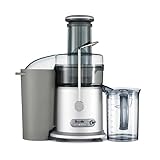
Speed does not eliminate ingredient inspection. Remove stickers, pits, stones, hard stems, excluded peel, and damaged areas; cut awkward shapes or pieces outside the feed guidance; and use only the supplied pusher. Hamilton Beach Big Mouth and Breville Juice Fountain models provide verified centrifugal pathways on JuicerPress, each with an internal review and exact Amazon destination.
Choose cold press for greens, fibers, and controlled variety
Kale, spinach, herbs, wheatgrass, celery, and mixed fibrous recipes benefit from a defined auger path and deliberate feed. Greens can be bundled in manageable amounts, long stalks can be shortened to the manual's guidance, and dense roots can be paced without asking a fast basket to handle every texture in the same way. A horizontal or vertical auger also offers different counter shapes and hopper options.
Cold press does not mean preparation-free or self-cleaning. Conventional chutes may require more cutting, wide hoppers add bowl and lid surfaces, and fine screens need prompt brushing. Ninja NeverClog JC151 and Omega All-in-One represent two verified cold press pathways in this comparison, while the larger Cold Press Juicers hub covers compact vertical and batch-hopper alternatives.
Preparation time can reverse the obvious speed winner
Centrifugal extraction is fast, but total time includes washing, trimming, cutting, assembly, active feeding, pulp management, pouring, disassembly, cleaning, drying, and storage. A large centrifugal chute may shorten cutting for firm produce. A wide cold press hopper may shorten active loading for a staged mixed batch. A compact machine may be faster to retrieve and wash even when its extraction step is slower.
Map one normal recipe through both mechanisms. Count pieces, identify pits and fibers, note the number of servings, and estimate the components that touch food. The result is more useful than comparing a motor speed with an auger speed. The real winner removes the slowest repeated step without adding a larger obstacle at the sink or cabinet.
Texture, foam, and separation are preferences
A fast basket can create visible froth, while a slow auger often supports a calmer-looking glass. Screen design, pulp controls, ingredient ripeness, feed pace, basket or screen cleanliness, and the pouring vessel also affect texture. Some shoppers prefer a lighter glass; others accept more body. A froth separator or alternate pulp filter can help only when it exists on the exact model and fits the household preference.
Do not turn texture observations into unsupported health claims. JuicerPress does not promise a fixed nutrient result, storage life, oxidation level, or yield advantage from either category. Produce condition and recipe composition can change output substantially. Compare several ordinary sessions, follow safe handling guidance, and choose the glass and workflow the household will actually use.
Noise is a category tradeoff with model variation
A centrifugal cutting basket normally creates a more noticeable operating sound than a slow auger. That can be an acceptable exchange for a short firm-produce session, or a deal-breaker in an apartment, near sleeping family members, or beside a home office. Cold press machines can support a calmer routine, but JuicerPress does not call any product silent without verified evidence.
Assembly and surface stability affect sound in both categories. Seat every basket, auger, bowl, lid, locking arm, seal, and container as directed. Stop for unfamiliar grinding, repeated vibration, electrical odor, leaking near the base, or damaged parts. A normal category difference never excuses a sound or movement the manual identifies as abnormal.
Basket cleaning and screen cleaning are different chores
The centrifugal basket combines cutting and fine-mesh separation, so it needs prompt rinsing and brushing from approved directions. Pulp can dry into the mesh while the large lid, bowl, pusher, pulp bin, and juice vessel occupy the sink. The cold press screen is usually smaller but sits among an auger, bowl, hopper, outlets, seals, and containers. Wide-hopper models add larger loading pieces.
Neither category owns easy cleanup. Reachability, part size, a visible pulp path, an appropriate brush, sink fit, drying space, and intuitive reassembly decide it. Dishwasher-safe claims apply only to named parts on the exact model; removable does not mean dishwasher-safe, and the powered base must remain dry. Compare cleanup before the purchase, not after the first sticky screen.
Counter shape and batch size separate the models
Compact centrifugal machines can suit smaller kitchens and one or two servings, while large pulp bins and batch vessels support more continuous firm-produce work. Horizontal cold press systems need counter length, standard vertical augers need height, and batch hoppers need lid clearance and larger washing space. Stored dimensions alone miss the real workstation.
Measure operating height, feed access, locking-arm or lid movement, cutting-board space, juice and pulp containers, removal paths, electrical access, the trip to the sink, and an air-drying area. Then match capacity to an ordinary weekday. Excess capacity can add cleaning; inadequate capacity can add interruptions. The better category is the one whose complete station fits without becoming a storage project.
Apples and carrots do not decide every mixed recipe
A centrifugal demonstration built around apples and carrots highlights that mechanism's natural strength. The answer can change when those ingredients become supporting pieces in a recipe dominated by celery, kale, parsley, ginger, or turmeric. A cold press auger may offer more control across the full basket even if each apple moves more slowly.
Conversely, buying a slow auger for an occasional handful of greens can add feeding time to the firm produce made every day. List ingredients by frequency and proportion rather than checking whether a machine can process them at all. The primary recipe should win; the edge case can use technique, a different tool, or a different day.
Compare current models without stale price shortcuts
The Breville Juice Fountain Plus and Hamilton Beach Big Mouth are direct centrifugal starting points for fast firm-produce routines. The Breville Compact favors limited space, while the Juice Fountain Cold Plus targets a broader chute and larger-batch position. On the cold press side, Ninja JC151 emphasizes an approachable everyday auger workflow, while Omega All-in-One represents horizontal control and approved multi-function versatility.
Amazon availability, sellers, bundles, and prices change, so JuicerPress does not publish a static price. Open the internal review first, then use each exact affiliate destination to verify model number, included pieces, seller, availability, current price, and return terms. Comparisons should treat both sides as real purchase candidates instead of placing an affiliate link on only the presumed winner.
A beginner decision tree that avoids feature overload
Choose centrifugal if the weekly basket is mostly firm produce, the juice is normally consumed fresh, the noise window is acceptable, and a basket can be brushed immediately. Choose cold press if greens or celery lead, mixed textures are common, deliberate feeding is acceptable, and screen or auger-part cleanup fits the sink. Choose a dedicated citrus press if prepared oranges, lemons, limes, or grapefruit are the only recurring job.
Within the correct category, decide compact versus batch, then chute or hopper workflow, then controls and pulp capacity. Finish with cleanup and working dimensions. Wattage, RPM, finish, and accessory count should separate models only after ingredient and workflow fit. This order prevents an impressive feature from rescuing the wrong mechanism.
Final verdict: make the routine choose the mechanism
Centrifugal wins when fast firm-produce juice is the repeatable habit. Cold press wins when greens, fibers, recipe versatility, deliberate feeding, or a calmer routine matters more. Neither wins every ingredient, kitchen, or batch. The correct answer can differ between two households using the same apple-and-carrot recipe because preparation, noise, sink space, and serving count differ.
Write the primary basket, servings, prep limit, cleanup limit, noise window, working dimensions, and storage plan. Eliminate the category that fails a non-negotiable, then compare verified models within the survivor. Use the Juicer Finder to challenge the result and the linked model reviews to move from a sound category decision to the exact current Amazon listing.
Sources and further reading
Models relevant to this decision
As an Amazon Associate, we may earn from qualifying purchases.



Frequently asked questions
Is a cold press juicer better than a centrifugal juicer?
Not universally. Cold press favors greens, fibers, controlled feeding, and often a calmer routine; centrifugal favors quick sessions with firm produce. Choose by the repeated recipe and full cleanup workflow.
Which juicer is better for apples and carrots?
A centrifugal juicer is a practical starting point when apples and carrots dominate because a fast basket and broad chute can reduce session time. Cold press may win when they support a greens- or celery-heavy recipe.
Which type is easier to clean?
Neither category automatically wins. Compare basket or screen access, pulp channels, seals, part size, sink fit, brushing, drying, and reassembly on the exact model.
Do centrifugal juicers make more foam?
Fast shredding can create more visible froth, though ingredients, feeding, basket condition, and the juice vessel also matter. Foam should be treated as a texture preference, not a universal health verdict.
Which type is better for beginners?
The better first machine is the one that fits the ingredients already purchased, the available noise window and counter, and the cleanup the shopper will repeat. Simpler behavior matters more than a premium label.
Final verdict
For cold press vs centrifugal juicer: which is better for you?, compare Breville Juice Fountain Plus and Breville Juice Fountain Compact only after the ingredient, working-space, and cleanup requirements pass. The better choice is the model whose documented tradeoff fits the routine you will actually repeat.