Why apples and carrots suit centrifugal juicers
Apples and carrots have enough structure for a rotating cutting disc to shred them consistently. A centrifugal basket then separates liquid from pulp rapidly, making this mechanism a practical first choice for a fresh morning glass. The advantage is not just motor-on speed: a broad feed chute can also reduce the number of pieces prepared when the exact model instructions permit.
Firm produce still requires inspection and control. Wash it, remove stickers and excluded material, cut pieces that do not fit safely, and use only the supplied pusher. Apple pits, seeds, stems, damaged areas, and the preparation of any exact variety should follow authoritative ingredient and model guidance rather than a broad whole-fruit claim.
Start with the recipe ratio, not the word best
A shopper making mostly apple-carrot juice has a different job from one using one apple and one carrot to carry kale, celery, parsley, ginger, or turmeric. The first routine rewards speed with firm produce. The second may reward the controlled auger path of a cold press machine even when each firm ingredient takes longer to feed.
Write the recipe by proportion and frequency. Identify the ingredients that occupy most of the basket, the number of servings, and whether the same machine must handle soft or fibrous days. A category that technically accepts every ingredient can still be a poor match for the texture processed most often.
Compact centrifugal for one or two fresh servings
A compact centrifugal juicer can keep a small station accessible and make a quick personal batch realistic. The tradeoff is that pulp capacity, chute size, or container scale may be smaller than a batch-oriented machine. A compact label also does not guarantee cabinet clearance once the feed assembly, pusher, juice vessel, and pulp removal path are included.
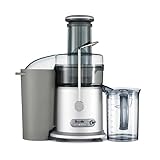
Breville Juice Fountain Compact is the verified compact pathway in this guide. Use its internal review to understand the model's stated strengths and tradeoff, then verify the exact listing, configuration, and current terms on Amazon. Buy compact because the normal batch and workstation are compact, not because it looks easier to store in a product photo.
Everyday centrifugal for speed and control
An everyday standard machine balances feed opening, controls, juice vessel, and pulp capacity. A second speed can support manufacturer-defined handling for different approved ingredient textures, while a straightforward control can suit a recipe that rarely changes. Speed selection must follow the exact manual rather than a general rule copied across brands.
Breville Juice Fountain Plus is the two-speed everyday pathway in the current verified catalog. Hamilton Beach Big Mouth offers a value-focused fast-juicing pathway with a three-inch chute in the linked model configuration. Read both reviews because similar category strengths can produce different decisions around footprint, controls, price position, and batch behavior.
Wide-chute batch machines trade space for fewer interruptions
A larger chute can reduce cutting, and a larger pulp or juice capacity can keep a family batch moving. Those advantages matter when several apples and carrots are processed at once. They matter less when the household makes one small glass and must wash a larger lid, bowl, basket, pulp bin, and vessel afterward.
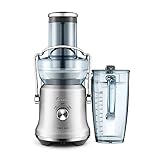
Breville Juice Fountain Cold Plus is the verified batch-oriented centrifugal pathway here. The word Cold is part of its model name; it does not turn the machine into an auger cold press. Compare its larger footprint, chute workflow, controls, and containers as a centrifugal system. Measure the complete loading, operating, removal, sink, and drying zone before paying for batch convenience.
When a cold press machine is the better apple-carrot juicer
Choose cold press when the same recipe frequently includes leafy greens, long fibers, herbs, or small dense roots and controlled feeding matters more than fast extraction. A wide-hopper auger can also reduce active loading for a mixed batch, though it adds a larger bowl to clean. A compact or horizontal auger changes the counter shape and preparation rhythm again.
TUUMIIST Wide Chute is included as a verified cold press alternative, not as a token losing product. Its internal review lets shoppers compare a lower-prep auger workflow with the three centrifugal pathways. If quieter operation or mixed-produce versatility is non-negotiable, a slower mechanism can deliver the faster complete ownership decision.
Prepare apples for the exact feed opening
A wide chute may accept a larger apple or apple portion when the manufacturer permits it, but size and shape vary. Inspect the fruit, remove stickers, and address stems, pits, seeds, damaged areas, or excluded material according to reliable preparation guidance and the juicer manual. Never force a round fruit that does not enter freely.
For a smaller chute, create uniform manageable pieces so feeding remains steady. Cutting can also expose hidden damage before it reaches the machine. The goal is not the fewest knife strokes at any cost; it is a safe, predictable feed that makes the basket or auger work without repeated stalls or manual clearing.
Prepare carrots and dense roots without forcing them
Carrots vary in diameter, curvature, dryness, and density. Trim and cut them to the exact model guidance, then feed at the pace the machine accepts. A powerful motor or high speed does not authorize added pressure. Keep hands and unapproved utensils out of the feed path, and stop rather than trying to overcome a stall.
Ginger, turmeric, and beets add different density and fiber to an apple-carrot recipe. Short manageable pieces and patient sequencing can matter more than maximum wattage. If these roots dominate small concentrated batches, compare minimum practical batch size and retained liquid in a cold press review before assuming a large centrifugal system is efficient.
Foam, pulp, and apparent yield need context
A centrifugal apple-carrot glass can show froth because of fast shredding and aeration, while pulp-control vessels or pouring technique may change what reaches the glass. A cold press screen can produce a different texture without guaranteeing pulp-free juice. Ripeness, water content, feed pace, basket or screen cleanliness, and recipe ratio all matter.
Avoid deciding from one wet or dry pulp batch. Apparent yield can rise when more fine pulp reaches the glass, and two apples of different varieties or storage conditions can behave differently. JuicerPress does not publish a guaranteed yield percentage or nutritional comparison. Choose the texture and workflow the household prefers, then compare several ordinary batches consistently.
Clean the cutting basket before carrot pulp dries
Carrot and apple residue can lodge in fine mesh. Move promptly from the final ingredient to approved disassembly, rinse loose pulp, brush the basket from the directions specified, inspect the bowl and pulp path, and let components dry fully. Keep the motor base dry and follow the exact cleaning sequence in the manual.
Dishwasher-safe claims belong to individual parts and models. Even when a lid or pulp bin is approved for a dishwasher, the fine basket may still need careful brushing. Compare the complete sink load before buying. A quick extraction followed by an avoided basket is not an easy routine.
Use serving count to choose the right scale
For one glass, quick assembly, a manageable basket, and an accessible compact station may matter more than maximum chute or pulp capacity. For multiple servings, interruption-free pulp space, juice-vessel volume, feed access, and model-specific operating guidance become more important. A large body earns value only when the normal quantity uses it.
Record the weekly serving pattern rather than the largest batch imagined. Include produce-washing space, a cutting board, containers, the route to the sink, and air-drying room. A small machine that must be emptied repeatedly can erase its convenience; a large machine washed for one glass can do the same.
Final verdict and apple-carrot buying checklist
For mostly apples and carrots, begin with centrifugal. Choose compact for smaller servings and limited stations, an everyday model for balanced controls and capacity, or a wide-chute batch model when cutting and interruptions are the real obstacles. Move to cold press when greens, celery, mixed fibers, deliberate feeding, or a calmer kitchen outrank raw speed.
Before purchasing, list recipe ratio, servings, acceptable cutting, noise window, desired texture, basket-cleaning tolerance, working dimensions, storage, and drying space. Read every linked internal review, then verify the exact model number, seller, configuration, availability, current price, and return terms on Amazon. Use the Juicer Finder to check whether another mechanism better fits the rest of the week's recipes.
Sources and further reading
Models relevant to this decision
As an Amazon Associate, we may earn from qualifying purchases.



Frequently asked questions
Is a centrifugal or cold press juicer better for apples and carrots?
Centrifugal is the practical starting point when apples and carrots dominate and speed matters. Cold press can be better when they support recipes led by greens, celery, fibers, or quieter operation.
Do apples need to be cut before juicing?
That depends on apple size, shape, condition, and the exact feed-opening instructions. Always inspect produce, remove excluded material, and cut anything that does not fit safely without force.
Can whole carrots go into a juicer?
Follow the exact model guidance. Carrot diameter, curvature, and density vary; trim or cut as required and feed patiently with the supplied pusher rather than forcing the machine.
Why is apple-carrot juice foamy?
Fast shredding can create froth, and ingredients, feed pace, basket condition, and pouring affect it. A froth-control vessel can change serving texture when included with the exact model.
Which juicer size is best for apple-carrot juice?
Match size to normal servings. Compact favors one or two fresh glasses; standard models balance space and capacity; batch machines earn their footprint when several servings are made regularly.
Final verdict
For best juicer for apples and carrots, compare Breville Juice Fountain Plus and Breville Juice Fountain Compact only after the ingredient, working-space, and cleanup requirements pass. The better choice is the model whose documented tradeoff fits the routine you will actually repeat.