What quiet means in a real juicing routine
Juicer sound is not one number. The motor or gears create a steady mechanical sound, firm produce can knock against the feed path, an unstable bowl can rattle, and a hard countertop can amplify vibration. Cleanup adds a second sound profile: containers, screens, bowls, and metal press parts can be more noticeable than the extraction itself in a sleeping household. A useful quiet-juicer decision therefore covers the whole prepare-to-clean session.
Duration matters too. A fast basket may be louder for a shorter period, while a slow auger may run at a calmer pitch for longer. Neither pattern is automatically less disruptive. Think about who shares the space, the nearest bedroom or home office, the time of use, the recipe, and the number of servings. The best choice is the one whose complete routine fits that setting without relying on an unsupported promise.
The evidence standard behind this shortlist
JuicerPress does not have comparable independent decibel tests for these six machines, and the manufacturers do not publish one standardized sound test across them. That prevents an honest one-through-six acoustic ranking. Instead, the shortlist separates verified mechanism and speed specifications, exact controls and construction, and direct physical facts such as the absence of an electric motor. A manufacturer sound claim would be listed if a current exact source supplied one; none of these electric product sources does.
Ninja documents that the JC151 motor base rotates its auger at low speeds. The two Omega product records identify 80-RPM horizontal extraction. Tribest documents 110 RPM for the Greenstar Elite and 120 RPM at 60 Hz for the U.S. Greenstar 5. Zulay describes a manual leveraged press that requires no electricity or batteries. Those facts support a careful workflow comparison, but only Zulay removes motor sound entirely. The electric ordering is a shopping judgment, not a measured sound ranking.
Most approachable electric starting point: Ninja JC151
The Ninja NeverClog JC151 leads the electric workflow shortlist because the current manufacturer page documents a low-speed auger, two pulp filters, reverse control, a compact body, and straightforward assembly. Ninja does not publish an exact quiet statement or laboratory decibel result on the current page, so the JC151 is not presented as a proven acoustic winner. Its advantage is an approachable mixed-produce format with clear current documentation.
It makes normal motor, mechanical, and ingredient sounds. Firm apple or carrot pieces can be more noticeable than cucumber, and a poorly seated container or unstable counter position can add vibration. The JC151 also requires preparation rather than accepting every item whole. Choose it for a controlled cold press routine, then confirm the exact JC151 listing, included filters, operating instructions, and current terms before buying.
Best motor-free path: Zulay cast-iron press
The Zulay cast-iron press contains no electric motor, so it removes motor and gear noise from the routine. A long lever applies pressure to prepared citrus halves or another ingredient the exact instructions permit. That makes it the clearest choice for a household whose quiet routine is orange, grapefruit, lemon, or lime rather than celery, kale, carrots, and mixed vegetable juice.
Motor-free does not mean sound-free. The handle linkage can move, fruit can release abruptly, the strainer and cup can contact the frame, and a vessel can knock against the base. Use a stable level counter, controlled pressure, and glassware that fits securely. The cast-iron body also wants a permanent station and enough overhead room for the handle. Do not buy it as a quiet substitute for an all-produce auger; its ingredient boundary is the decisive tradeoff.
Best 80-RPM horizontal alternatives: Omega
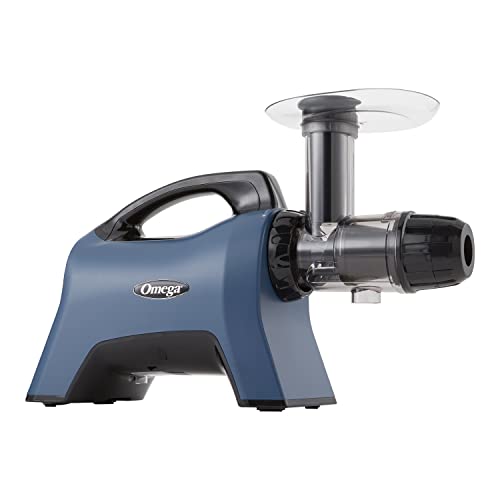
Omega All-in-One and Omega MM1500BL both use documented 80-RPM horizontal extraction in their verified product records. That number describes auger speed, not acoustic output. Their value for a noise-sensitive shopper is the controlled piece-by-piece rhythm: produce is cut to the model guidance, fed deliberately, and observed as juice and pulp leave separate outlets. The MM1500BL adds dedicated celery and standard produce end caps, while All-in-One emphasizes broader nutrition-system versatility.
A horizontal body requires more counter length, space for both containers, and hands-on feeding. Dense root pieces can still create impact or strain sounds, and a longer session may matter in an apartment even when the motor tone seems calm. Choose between these Omegas by the produce basket first. MM1500BL makes sense for frequent celery; All-in-One is the broader mixed-produce path. Treat noise as one part of the ownership fit, not the reason to ignore ingredient capability.
When a twin-gear model belongs
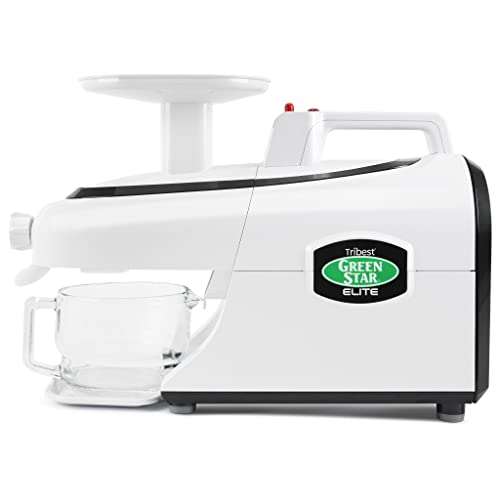
Tribest Greenstar Elite GSE-5000 and Greenstar 5 GS5 are specialized twin-gear machines. Tribest lists the Elite at 110 RPM and the U.S. 60-Hz GS5 at 120 RPM. Those speeds and the interlocking gear system describe deliberate extraction methods, not certified sound levels. They belong in this cluster for shoppers who want greens, wheatgrass, celery, roots, and controlled horizontal feeding—and who accept more assembly, counter length, and cleanup than a simpler single-auger machine.
Two gears, screens, housings, pressure components, and accessory choices create a different sound and handling profile from the Ninja or Omega. Correct assembly is essential; unfamiliar grinding, scraping, repeated stalling, leaking, or electrical odor is a reason to stop and consult the exact manual. A Greenstar should be chosen for its ingredient and twin-gear workflow. The verified speed can inform expectations, but it cannot prove the machine is quieter than a documented single-auger model.
Why RPM cannot tell you which juicer is quietest
Revolutions per minute report how fast a named rotating component turns. They do not describe motor enclosure, gear contact, vibration isolation, ingredient impact, load, counter resonance, pitch, or sound duration. Comparing an 80-RPM auger with a 110- or 120-RPM gear system says nothing reliable about the sound heard in the next room. Those speeds also cannot be compared directly with a much faster centrifugal basket as if speed and loudness were identical measurements.
Use RPM to understand feeding pace and mechanism. Use exact manufacturer sound language when available, and be honest when comparable decibel evidence is missing. If quiet use is a hard requirement, buy from a seller with clear current terms, preserve the packaging until the operating fit is confirmed, and assess the exact machine in the actual kitchen within the allowed return process. JuicerPress does not convert incomplete evidence into a false ranking.
Produce and feeding can be louder than expected
Firm carrots, beets, apples, and dense ginger pieces can create brief knocks as the auger grips them. Uneven pieces can tumble, an overfilled chute can strain, and long celery fibers can wrap or collect if they are not prepared to the exact guidance. Softer high-moisture ingredients may sound calmer, but they can build pulp on a screen and lengthen the session. The recipe changes both sound character and operating time.
Prepare manageable pieces, feed without force, and let the machine regain its normal rhythm before adding more. Do not use a pusher as a ram or place fingers or utensils into a powered feed path. If a new sound appears with a specific ingredient, stop safely and inspect the permitted user-serviceable parts after the machine is fully off. A calmer routine comes from correct loading as much as from motor design.
Counter resonance can change the experience
A rigid stone, composite, or hollow cabinet structure can transmit vibration differently from another surface. A container touching the housing, a cord tapping a cabinet, or a loose item beside the machine can create a secondary rattle that shoppers mistakenly attribute to the motor. Set the juicer on the stable, level surface required by its manual and keep the vessels correctly aligned with a little clearance from surrounding objects.
Do not improvise a towel, foam pad, or thick mat beneath a powered appliance if it can reduce stability, block ventilation, trap liquid, or conflict with the manual. Start by removing nearby objects, reseating all approved components, checking the feet and counter for debris, and using the supplied containers correctly. For a manual press, confirm base stability and the full handle arc before applying pressure. Safe placement is the first noise-control step.
Cleanup belongs in a quiet-kitchen comparison
A large hopper can reduce chopping while creating a broad lid and bowl to wash. A twin-gear machine adds gears and housings that need correct handling. A horizontal auger spreads parts and two vessels across the counter. The Ninja uses two filter choices, and the Zulay press concentrates pulp in a cone or strainer. These differences affect how long the sink is occupied and how much clatter the routine creates after extraction.
For early use, set out the approved brush, pulp container, drying area, and correctly sized cup before starting. Remove loose pulp, rinse food-contact pieces before residue dries, and place parts gently rather than stacking them in an unstable pile. Dishwasher permission is exact-model and exact-part guidance; it should never be inferred from this quiet shortlist. A machine that sounds calm but creates an impractical cleanup session may still be the wrong shared-space choice.
How to compare the six products without a false ranking
Begin with the ingredient boundary. Choose Zulay only for the prepared press-compatible fruit routine. Choose Ninja when an approachable documented low-speed mixed-produce path leads the decision. Choose Omega MM1500BL for a celery-centered horizontal workflow, Omega All-in-One for broader horizontal versatility, or a Greenstar for committed twin-gear use. Remove any machine that cannot handle the repeat ingredients before considering its sound profile.
Next, compare counter length, operating height, container placement, active feeding, normal batch duration, disassembly, sink fit, and drying. Read the exact model review and current manual. Finally, confirm the model number, included pieces, seller, availability, current price, and return terms on Amazon. This process produces a defensible shortlist without pretending an RPM table is a sound laboratory.
Final quiet-juicer shortlist
Ninja JC151 is the most approachable documented electric starting point, but its current manufacturer page does not make an exact quiet claim. Zulay is the motor-free specialist when the entire routine is press-compatible citrus or pomegranate. Omega All-in-One and MM1500BL are controlled 80-RPM horizontal choices for broader produce and celery respectively. Greenstar Elite at 110 RPM and the U.S. Greenstar 5 at 120 RPM are twin-gear options for shoppers prioritizing the mechanism and willing to accept additional assembly and washing.
None has a comparable published decibel result that supports a universal acoustic winner. RPM does not measure loudness, and motor-free does not remove linkage, fruit, vessel, or cleanup sounds. Match the mechanism to the recipe, then reduce avoidable noise through correct preparation, patient feeding, stable placement, and an organized cleanup station. That is a more useful buying decision than a superlative the available evidence cannot support.
Sources and further reading
Models relevant to this decision
As an Amazon Associate, we may earn from qualifying purchases.




Frequently asked questions
What is the best electric starting point here?
Ninja JC151 is the most approachable documented electric starting point because its current page confirms a low-speed auger and clear controls. It does not publish an exact quiet claim or a comparable decibel result.
Is a slow juicer always quiet?
No. Slow describes rotational speed or extraction pace. Motor design, gears, produce impact, assembly, vibration, counter resonance, and duration all affect sound.
Does a lower RPM mean a quieter juicer?
No. RPM does not measure loudness. Use it to understand the mechanism and feeding pace, not as a substitute for decibel evidence.
Which option has no motor?
The Zulay cast-iron press requires no electricity or batteries. It still creates normal handle, fruit, vessel, and cleanup sounds and is limited to press-compatible produce.
Are centrifugal juicers excluded because they are bad?
No. They can be excellent for fast firm-produce batches. This shortlist prioritizes quieter-use evidence and controlled or motor-free workflows, while the centrifugal hub covers speed-first choices.
Why are no decibel numbers shown?
The selected models do not share a comparable standardized manufacturer decibel test. Publishing unmatched or improvised readings would create false precision.
Final verdict
For best quiet juicers: 6 evidence-aware picks for calmer kitchens, compare Ninja NeverClog JC151 and Omega All-in-One only after the ingredient, working-space, and cleanup requirements pass. The better choice is the model whose documented tradeoff fits the routine you will actually repeat.