Compare six exact horizontal, vertical, and twin-gear juicers for wheatgrass by documented ingredient fit, feed control, pressure path, screen access, assembly, cleanup, and model identity.
Know before you buy: Professional naming and construction do not by themselves establish restaurant certification or suitability for every commercial setting.
Know before you buy: The horizontal twin-gear assembly requires deliberate feeding, careful alignment, and more cleaning attention than a simple single-auger machine.
Know before you buy: The 19.8-pound vertical system saves horizontal counter length but still needs loading height, bowl-removal clearance, and a deliberate screen-cleaning routine.
Thin blades behave differently from apples, carrots, or a cucumber-led green juice. They can bend, twist, mat against a screen, collect near a pressure outlet, or move through the feed opening without being gripped consistently. A large chute or high wattage does not establish suitability. Current product documentation is the first filter.
This collection therefore stays narrow. It favors horizontal single-auger and true twin-gear machines with controlled feed paths rather than filling the grid with every cold press. The purpose is not to crown the most elaborate mechanism; it is to identify models whose intended use and ownership routine make sense for wheatgrass.
Greenstar Pro and Greenstar 5 lead the shortlist
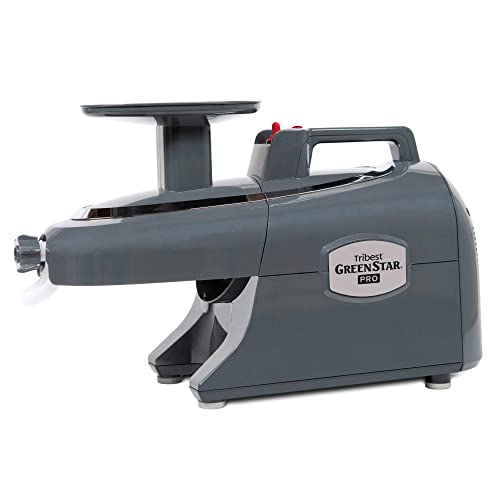
Tribest's current materials for Greenstar Pro GS-P502 and Greenstar 5 GS5 explicitly include wheatgrass among supported produce. Their twin-gear layouts create a deliberate horizontal extraction path and model-specific screen and pressure choices. That makes them the strongest wheatgrass-first starting points in JuicerPress's verified catalog.
The distinction does not remove the need to verify the exact box. Confirm the model number, voltage, included screens, pressure components, pusher, seller, condition, manual, availability, and current support. Similar Greenstar names and color variants should never be treated as interchangeable listings.
Established alternatives change the ownership tradeoff
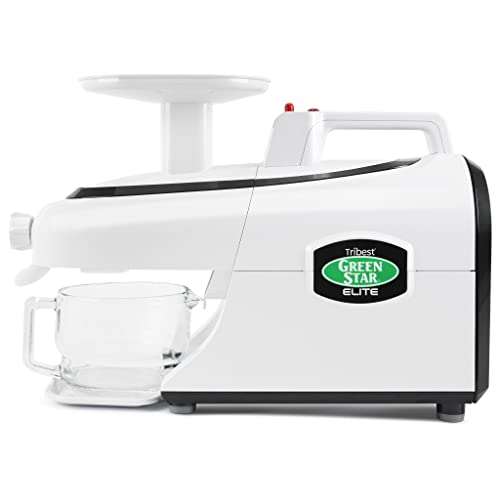
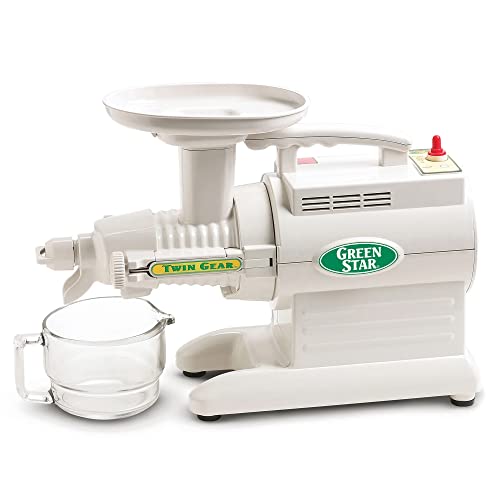
Greenstar Original and Elite provide established twin-gear routes for greens-focused users. Their assembly, housing, screens, and care guidance differ, so instructions from one family should not be transferred to another. Greenstar Gold is more relevant to the broader leafy-greens collection than this narrower wheatgrass shortlist because a legacy model requires especially careful configuration and parts verification.
Omega All-in-One offers a simpler horizontal single-auger alternative. It reduces the matched-gear alignment work and may fit a household that rotates wheatgrass with celery, roots, and mixed recipes. The tradeoff is choosing a general controlled-auger routine rather than the most specialized documented Greenstar pathway.
Plan the small-batch feed before buying
Wheatgrass is normally prepared and fed in smaller amounts. Read the exact manual for trimming, bundle size, screen, pressure setting, pusher use, and sequence. Do not twist a dense rope or copy a handful measurement from another model. Let each portion enter before adding more, and watch both juice and pulp outputs.
Stop adding grass if pulp slows, juice changes sharply, material rises, or the motor note becomes unusual. More produce can tighten an obstruction. Use only the model's documented brief reverse procedure, or switch off, unplug, and disassemble in the stated order. Never put fingers or improvised tools in a powered opening.
Compare yield with equal prepared weights
Wheatgrass yield changes with variety, freshness, blade length, moisture, trimming, starting weight, wash water, feed size, screen, pressure, configuration, retained liquid, foam, and measurement method. A universal percentage or isolated demonstration is not a fair comparison, and JuicerPress does not promise maximum nutrition from a mechanism.
Use equal prepared weights, the correct parts, the same vessel, and repeated ordinary sessions. Keep any supporting fruit or vegetables separate in the record. Note texture, retained material, preparation, active feeding, and cleanup with liquid volume. The best result balances output with a routine that will actually be repeated.
Fine grass fibers make cleaning decisive
Grass fibers can remain in screen mesh, gear teeth, auger grooves, pulp outlets, pressure caps, housings, seals, and corners. Prompt disassembly, brushing, and rinsing are easier than removing dried residue. Let every approved food-contact part dry fully before reassembly or storage and keep the motor base and cord dry.
Dishwasher rules vary by model and individual part. Greenstar Elite or Pro guidance cannot be copied to Original, Gold, or Greenstar 5. Removable does not mean dishwasher-safe. Check the exact manual for rack, detergent, temperature, brush, and hand-wash requirements before the first session.
Food safety and health claims require restraint
Wash hands, tools, surfaces, and sound produce. Rinse grass under running water without soap, detergent, or commercial produce wash, remove damaged material and debris, and keep it away from raw animal foods. A juicer does not sterilize wheatgrass. Fresh home-pressed juice is generally unpasteurized and should be handled as perishable food.
JuicerPress does not claim that wheatgrass juice prevents, treats, detoxifies, or guarantees a health outcome. Machine choice can improve workflow; it cannot establish a medical result. People with individual dietary, medication, immune-system, pregnancy, or food-safety concerns should seek qualified professional guidance.
Choose a model pathway
Juicers for Wheatgrass separates the shortlist into 4 practical routes: documented wheatgrass specialist, current flagship twin gear, established twin-gear alternatives, simpler horizontal single auger. Start with the route that matches the dominant routine, then read its exact model review before opening the retailer listing.
Documented wheatgrass specialist
A verified Greenstar Pro route for users who want wheatgrass support and accept twin-gear setup and cleaning.
Choose Greenstar Pro GS-P502 or Greenstar 5 GS5 when wheatgrass is a repeated specialist job and the full twin-gear cleaning routine is acceptable. Compare Original or Elite when their exact established configuration fits, or choose Omega All-in-One for simpler horizontal single-auger ownership. Safe produce handling, model-approved portions, visible pulp flow, prompt brushing, and current listing verification matter more than an oversized feature list.
Use the Juicer Finder to test the ingredient, routine, space, and budget decision before purchasing.
Frequently asked questions
What juicer type is best for wheatgrass?
A model-documented horizontal single-auger or twin-gear machine is the strongest starting point because it offers controlled small-batch feeding.
Which exact models explicitly support wheatgrass?
Current Tribest materials for Greenstar Pro GS-P502 and Greenstar 5 GS5 explicitly include wheatgrass. Verify the current manual and listing.
Is a wide hopper useful for wheatgrass?
Opening size alone does not establish suitability. Documented feed control, screen choice, pressure path, pulp movement, and cleaning matter more.
Can wheatgrass be pushed through after flow stops?
No. Stop adding material and use the exact model's documented reverse, shutdown, and disassembly procedure.
How should I wash wheatgrass?
Rinse sound blades thoroughly under running water. FDA guidance does not recommend soap, detergent, or commercial produce wash.
Why are there only five recommendations?
This is a specialist collection. JuicerPress includes only exact verified products with a defensible wheatgrass or closely documented greens pathway instead of padding the list.