Start with safe produce and a clean station
Use greens that are sound and properly refrigerated. Discard visibly spoiled or moldy material rather than expecting a juicer to make it safe. Keep produce away from raw meat, poultry, seafood, eggs, and their juices. Wash hands with soap and water, clean the cutting board and knife, and assemble only the food-contact parts approved for washing. Keep the motor base and cord dry.
FDA guidance recommends rinsing produce thoroughly under running water and does not recommend soap, detergent, or commercial produce wash. Separate leaves so water reaches folds and stems, remove stickers or ties, and inspect for damaged areas. Drain excess water when that makes handling safer, but do not leave washed cut greens at room temperature longer than necessary.
Sort greens by structure
Tender spinach, parsley, cilantro, and mint behave differently from kale, collards, cabbage, and chard. Small leaves can scatter; broad leaves can fold over themselves; dense stems can resist the feed path; herbs can stay behind on wet surfaces. Sorting the batch lets you prepare each texture deliberately instead of pushing a mixed handful into the chute and hoping the machine separates it.
Decide which clean stems belong in the recipe according to taste, condition, and model guidance. Remove tough or damaged portions when appropriate. The goal is not to strip every leaf to a fragile fragment; it is to create manageable pieces or bundles that the exact auger, gear, hopper, or basket can accept without force.
Read the manual before choosing a bundle size
There is no universal instruction to roll every green into a tight ball. A horizontal auger may accept a loose folded bundle, a vertical chamber may require smaller portions, and a batch hopper may specify a fill level or ingredient sequence. Twin-gear models have their own screens, pressure parts, pusher technique, and assembly requirements. Use the exact manual as the authority.
Prepare a normal serving before power-on. Place the juice and pulp vessels correctly, confirm caps, seals, screens, auger or gears, locks, and outlets, and keep the approved pusher nearby. Remove utensils, twist ties, and packaging from the station. A large opening does not make fingers or improvised tools safe.
Feed small amounts at a steady pace
Begin with the quantity and sequence documented for the machine. Let the mechanism take each portion before adding more. Leaves that sit motionless above the auger are not helped by packing another fistful on top. Use only the supplied pusher as directed, without leaning hard enough to change the motor sound or deform produce against a closed path.
Watch both outputs. Normal juice and pulp movement tell you more than a countdown timer. If pulp slows, juice output changes sharply, material rises in the throat, or the motor note becomes unusual, stop adding produce. Never treat wattage or a NeverClog family name as permission to force the feed path.
Alternate ingredients only while the machine is flowing
In a compatible mixed recipe, a firm or high-moisture ingredient can help move leaves through the screen area. Cucumber, celery, apple, pear, or another approved ingredient may work, depending on the model, preparation rules, and recipe. Alternate deliberately rather than loading every firm piece first and finishing with a dense mass of leaves.
This technique is not a clog remedy. Once output has stopped, adding a carrot or apple can pack the obstruction more tightly. Stop, use the documented reverse procedure if the exact manual provides one, or power off, unplug, and disassemble as instructed. Repeated stalls, leaking, grinding, heat, smoke, electrical odor, or damaged parts require a full stop.
Handle kale, spinach, herbs, and cabbage deliberately
For kale or chard, compare leaf size and stem density with the feed instructions and cut across long structural fibers when required. For spinach and herbs, gather only manageable amounts so leaves do not scatter around the opening or form a wet mat. Cabbage is denser than loose greens and may need compact pieces rather than a large folded slab.
Flavor can concentrate quickly with some greens and herbs, so begin with a modest recipe and adjust taste in later sessions. This is practical cooking guidance, not medical advice. JuicerPress does not promise detoxification, disease prevention, superior nutrient absorption, or a particular health outcome from green juice.
Use a repeatable method to judge yield
Do not compare one wilted handful with a freshly washed bunch or one pulp-heavy screen with a finer filter. Weigh equal prepared portions, account for supporting ingredients separately, use the correct machine configuration, and collect output in the same vessel. Note whether the finished glass contains more suspended pulp, because texture can change the apparent volume.
Repeat the method over several normal sessions. Record preparation time, active feeding, output, texture, material retained in the housing, and cleanup. A slightly smaller volume from a fast, repeatable routine may be more useful than a marginally larger result that leaves gears or mesh difficult to clean.
Clean green residue immediately
After the last ingredient clears normally, switch off and unplug as the manual directs. Disassemble in the documented order, remove loose pulp, rinse approved parts, brush both accessible sides of the screen, and inspect the pulp outlet, auger grooves, gear teeth, seals, cap, bowl, and housing channels. Let parts dry fully before reassembly or storage.
Do not assume every removable part belongs in a dishwasher. Follow exact rack, detergent, temperature, and hand-wash rules. A brush that fits the mesh safely is usually more useful than soaking an assembled screen while fine particles dry elsewhere. Never immerse the powered base or spray liquid into electrical openings.
Store juice as a perishable food
Fresh household juice is generally unpasteurized and can carry microorganisms from produce, hands, tools, or equipment. Use clean containers, keep the serving covered and refrigerated promptly when it will not be consumed immediately, and follow applicable food-safety guidance for people at higher risk from foodborne illness. Juicing does not sterilize an ingredient.
Avoid broad storage-life promises based on machine speed or extraction marketing. Temperature, sanitation, ingredient condition, container, headspace, and time all matter. When safety is uncertain, discard the juice. For routine quality, make an amount the household can use promptly rather than depending on a maximum-day claim.
Final leafy-greens workflow
The repeatable sequence is simple: clean the station, rinse and inspect sound produce, sort by texture, prepare within the exact manual, assemble and position both vessels, feed manageable amounts, alternate approved ingredients only during normal flow, watch the outputs, stop at the first sign of a blockage, and clean before residue dries.
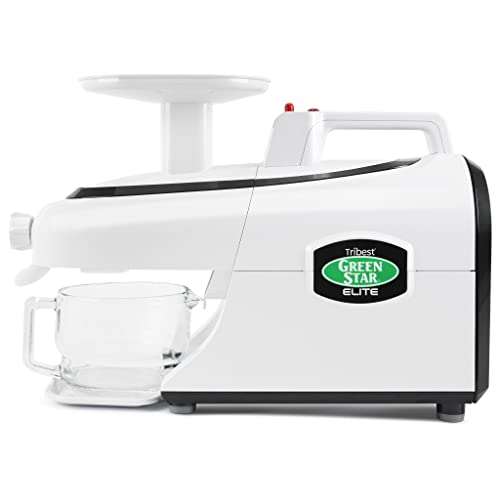
If this still feels too involved, the buying decision may be the problem. Compare the Omega All-in-One for deliberate horizontal control, Ninja JC151 for mixed recipes, Omega vertical formats for a different counter shape, and Greenstar models for a more committed twin-gear routine. Technique can improve a suitable machine, but it cannot turn the wrong mechanism or intolerable cleaning process into a good daily fit.
Sources and further reading
Models relevant to this decision
As an Amazon Associate, we may earn from qualifying purchases.




Frequently asked questions
Should leafy greens be rolled into a ball?
Not universally. Use the portion size and folding or bundling method documented for the exact machine. A tightly packed wad can obstruct some feed paths.
Why do leaves stay in the hopper?
Light or wet leaves can bridge, float, or cling to the chamber. Stop adding produce, follow the manual, and avoid forcing more material into a stalled path.
Can I use an apple or carrot to clear a clog?
Not after flow has stopped. Extra produce can pack an obstruction. Use only the model's documented reverse, shutdown, and disassembly procedure.
Do I wash greens with soap before juicing?
No. FDA guidance recommends washing produce under running water and does not recommend soap, detergent, or commercial produce wash.
How soon should I clean the screen?
Promptly after the batch, following the shutdown and disassembly instructions. Fine green residue is easier to brush and rinse before it dries.
Does green juice have guaranteed health benefits?
No. JuicerPress provides appliance and food-handling guidance and does not promise treatment, prevention, detoxification, or guaranteed health outcomes.
Final verdict
Use the preparation and feeding sequence above for juice leafy greens without clogs or wasted leaves, but let the exact model manual override any general technique. Choose another mechanism if the normal routine repeatedly requires force, unsafe workarounds, or impractical cleanup.