Start with the fact that home juice is untreated
FDA explains that bacteria from fresh produce can enter juice and that juice can be contaminated unless the produce or juice receives pasteurization or another validated treatment. A household auger, basket, reamer, or press extracts liquid; it does not perform that treatment. Rinsing produce and cleaning equipment are essential risk-reduction steps, but neither sterilizes the ingredients or the finished drink.
This matters more than the brand or mechanism. Cold press, masticating, centrifugal, and citrus juice can all be untreated. Do not attach a safety halo to slower rotation, less foam, an opaque bottle, or an ingredient associated with acidity. Begin the storage decision by treating the batch as a perishable food made from raw produce.
Clean the route into the container
Wash hands for at least 20 seconds with soap and warm water before and after preparation. Use sound produce, cut away damaged or bruised areas, discard rotten produce, and wash under running water before cutting or juicing. FDA does not recommend soap, detergent, or commercial produce wash. Scrub firm produce with a clean produce brush and prevent contact with raw meat, poultry, seafood, eggs, and their tools or drips.
Use a clean correctly assembled juicer and a clean food-safe collection vessel. A container cannot rescue juice that passed through a dirty screen, loaded pulp path, cracked seal, questionable cutting board, or unwashed hands. Follow each model's care instructions and keep the powered base dry.
Move from collection to cold storage promptly
Serve the amount wanted, then cover and refrigerate the remainder promptly. Do not leave a pitcher on the counter while the entire machine is cleaned, the household eats breakfast, and containers are located. Stage the clean storage container before juicing if a batch is planned. That simple workflow reduces warm holding and avoids pouring through extra unclean vessels.
FDA advises refrigerating perishables right away and uses a two-hour maximum for foods requiring refrigeration at room temperature, shortened to one hour when the air temperature is above 90°F. That outer limit is not a target for juice quality. Prompt refrigeration is the better routine, particularly because the juice began as raw produce and received no household pathogen-reduction treatment.
Keep the refrigerator at 40°F or below
FDA says the refrigerator should be at or below 40°F (4°C) and recommends an appliance thermometer. A control dial number is not a temperature measurement. Check the actual compartment, avoid overcrowding that blocks air circulation, and keep the container in a reliably cold area rather than assuming the warmest door shelf performs the same as the main cabinet.
If the refrigerator loses power or the batch sits above the safe refrigeration range, use current FDA emergency and storage guidance rather than guessing from touch. A cold-feeling bottle can still have an unknown history. When refrigeration was neglected or the history is uncertain, discarding the juice is safer than tasting it to decide.
Use a clean covered food-safe container
Choose a container intended for food, clean by its own instructions, intact, and sized for the batch. Covering helps protect the drink from spills, refrigerator debris, and cross-contact. A smaller appropriately filled container can reduce repeated transfers and excess open space, but headspace management is a quality choice—not pasteurization and not proof of a longer safe life.
Do not pour hot water into a vessel unless its manufacturer allows it, and do not reuse a container with damaged seals, cracks, persistent residue, or an unknown previous use. If using the juicer's supplied jug and lid, follow the exact model directions. Manufacturer claims about a sealed jug belong to that accessory and stated conditions; they do not override public-health handling guidance.
Separate storage quality from food safety
Flavor, aroma, color, foam, pulp suspension, and separation can change as juice sits. Those are quality observations. Harmful bacteria may not create an obvious warning, so a normal smell or bright color does not prove safety. Conversely, natural settling does not automatically mean spoilage. Stirring or shaking can recombine suspended pulp when the batch has been handled safely, but it does not reset time or temperature.
Do not taste questionable juice. Discard liquid that has an uncertain handling history, was inadequately refrigerated, contacted a questionable surface, or shows a damaged or leaking container. Mold, gas, bulging, unusual pressure, or a clearly suspicious appearance or odor is also a discard signal, not an invitation to skim or strain.
There is no universal homemade-juice day count
A fixed shelf-life promise would ignore ingredients, starting contamination, washing, equipment cleanliness, extraction path, pulp, container, temperature, warm holding, opening frequency, and the needs of the person drinking it. JuicerPress does not convert a manufacturer's quality claim, a packaged-juice study, or a retailer slogan into a universal home safety rule.
Make a batch sized for prompt household use. Label the container with the preparation date and time so nobody relies on memory. If a clinician or public-health authority gives stricter guidance for a household member, follow that guidance. For a recurring batch routine, smaller more frequent sessions may be a better fit than stretching storage to a maximum.
Higher-risk people need the clearest boundary
FDA identifies children, older adults, pregnant people, and people with weakened immune systems as groups at greater risk of serious illness from untreated juice. A home storage routine cannot remove the untreated status. People in these groups should follow current FDA guidance and individualized clinical advice rather than a website's maximum-time estimate.
The same caution applies when serving another household, taking juice to an event, or giving it to someone whose medical context is unknown. JuicerPress provides general equipment and food-handling information, not clinical authorization. A clean-looking bottle and cold refrigerator do not substitute for an appropriate treated product when that is what the person's guidance calls for.
Transport and batch service need a cold-chain plan
For transport, begin with cold juice in a clean covered leak-resistant container and use appropriate cold-holding equipment. Minimize time outside refrigeration and avoid placing the drink beside raw animal products or dirty ice-chest surfaces. Do not rely on outdoor temperature, a cool car, or a few loose ice cubes as a measured refrigerator.
For family service, pour what is expected to be used rather than repeatedly warming and returning the full storage vessel. Use clean cups and do not return leftovers from a glass to the main container. If the batch must travel or sit through a long event, a treated commercial product with clear label instructions may be the more appropriate choice.
Final storage workflow
The repeatable sequence is: wash hands and sound produce correctly, use clean food-contact parts, stage a clean food-safe container, collect the juice, serve or cover it, refrigerate promptly at 40°F (4°C) or below, label the preparation time, keep the cold chain intact, and use the batch promptly. Clean the juicer separately by its model-specific instructions.
No lid, jug, vacuum device, slow motor, or recipe ingredient turns that sequence into sterilization. Manufacturer storage language may help compare a supplied container, but it does not prove safety for another recipe or household. When anything about contamination, time, temperature, or container integrity is uncertain, discard the juice.
Sources and further reading
For product operation, food handling, and other factual claims, we use primary manufacturer, public-health, and clinical guidance as appropriate.
- FDA: What You Need to Know About Juice Safety
- FDA: Selecting and Serving Produce Safely
- FDA: Are You Storing Food Safely?
- Food Science & Nutrition: Stability of Cara Cara orange juice components during refrigerated storage
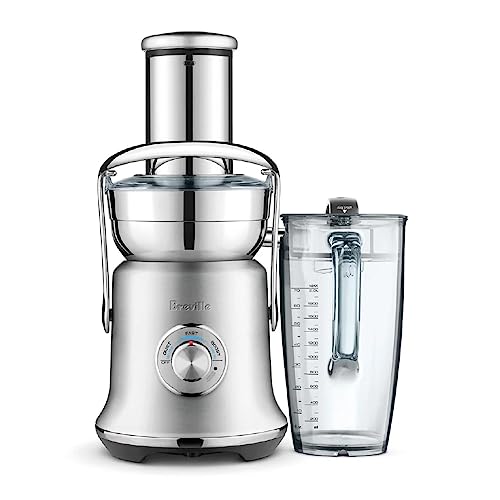
- Breville Juice Fountain Cold XL BJE830 documentation
- Nama J2 product documentation
- Kuvings AUTO10 product documentation
Recommended starting points
These models represent different mechanisms and ownership tradeoffs for this decision. We do not display prices because Amazon availability and pricing can change.
As an Amazon Associate, we may earn from qualifying purchases.


Frequently asked questions
How many days can homemade juice be stored?
There is no universal safe day count. Ingredients, sanitation, temperature, container, handling, and the person drinking it vary. Refrigerate promptly and use promptly.
What refrigerator temperature should I use?
FDA says at or below 40°F (4°C). Use an appliance thermometer rather than relying only on the control dial.
Does an airtight container pasteurize juice?
No. A covered container supports storage hygiene and quality, but it is not a pathogen-reduction treatment.
Can smell or color prove juice is safe?
No. Harmful bacteria may not cause an obvious smell, taste, or appearance change. Do not taste questionable juice.
Does cold pressing make juice safe longer?
A cold-press mechanism does not establish a safe storage period. Treat fresh home juice as untreated and perishable.
Final verdict
Use the preparation and feeding sequence above for store fresh juice safely, but let the exact model manual override any general technique. Choose another mechanism if the normal routine repeatedly requires force, unsafe workarounds, or impractical cleanup.