Define a batch from produce to refrigerator
Batch juicing is not simply filling the largest hopper. Define prepared produce weight, intended servings, container headroom, refrigerator space, machine duty limits, pulp interruptions, and the cleanup window after the last ingredient. A fast basket may finish firm produce quickly but require immediate mesh brushing. A self-feeding auger may reduce active loading while adding a large chamber, hopper, seals, and outlets to wash.
Choose a machine for the bottleneck. If cutting and continuous feeding consume time, compare batch hoppers. If firm-produce throughput is the limit, compare centrifugal baskets and pulp capacity. If screen scrubbing ends the habit, compare screen-free auger paths. Do not average away a failed non-negotiable with an impressive container number.
Largest verified hopper: Kuvings AUTO10
Kuvings lists a 100-ounce auto hopper, 240-watt induction motor, 60-RPM operation, up to 45 minutes of continuous use, safety assembly detection, a special cleaning tool, and juice, smoothie, and blank strainers. The large hopper is useful for staged home batches and the additional strainers expand documented modes. Those components also create storage, identification, cleaning, and drying work.
Kuvings markets the AUTO10 as hands-free and says users can walk away. JuicerPress treats that as manufacturer positioning, not permission to leave a powered food appliance unattended. Inspect and prepare produce, keep the lid and bowl correctly locked, monitor outlets and containers, and stop for abnormal sound, odor, leaking, or interrupted flow. The 45-minute specification is an operating limit, not commercial certification.
Best screen-free Omega batch path: JC2022
Omega’s JC2022 uses a two-liter, 68-ounce hopper, 70-RPM all-in-one auger without a separate juicing screen, automatic pressure detection that can change direction, a five-minute extraction timer, and a detachable cord. The screen-free design removes one conventional fine-mesh task, while the hopper supports loading a planned mixed recipe before extraction.
Omega’s whole-piece and no-prep language should not replace the exact current manual. Wash and inspect produce, remove pits and excluded material, cut awkward ingredients when required, and leave enough room for movement. The five-minute timer and 60-second memory behavior describe the machine’s control cycle; they do not prove that every batch clears without attention.
Best fine-and-coarse strainer batch path: Nama J2
Nama documents a self-feeding chamber, 50-RPM 200-watt induction system, fine and coarse strainers, spinning brush, and a 9.8-by-9.0-by-17.7-inch body. The two strainers give a batch user a texture decision that screen-free systems handle differently. Nama publishes differing load or output ranges across its current materials, so JuicerPress does not turn them into one guaranteed finished-juice figure.
Choose J2 when staged mixed produce and strainer choice matter more than the absolute largest hopper. Hands-free describes reduced piece-by-piece feeding, not unsupervised operation. Both strainers, the spinning brush, chamber, auger, outlets, silicone pieces, containers, and cap need model-specific care and full drying.
Fastest firm-produce route: Breville Cold XL
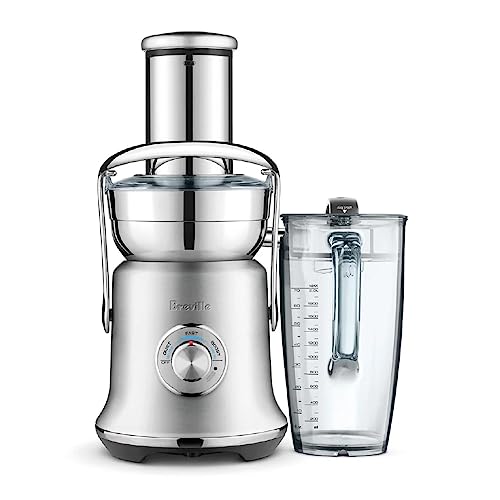
Breville lists a 3.5-inch chute, fast and quiet settings, a 70-fluid-ounce seal-and-store jug, a titanium-reinforced cutting disc, and an Italian micro-mesh filter. This pathway is for large apple, carrot, beet, cucumber, and similar firm-produce sessions where active processing speed matters more than slow-auger feeding. The direct-to-glass nozzle also supports a smaller pour without abandoning the batch-capable machine.
The jug is not a hopper and 70 fluid ounces is not a yield guarantee. Produce condition, preparation, moisture, trimming, foam, retained liquid, and pulp change output. The high-speed basket demands immediate brushing and creates a different sound and texture profile. Follow Breville’s exact storage and safety guidance rather than treating a sealed jug as a general food-safety rule.
Best strainer-free Hurom batch path: H400
Hurom specifies an 18.6-ounce chamber, large self-feeding hopper, 90-RPM Easy Cleaning Multi Auger, 150-watt motor, and up to 30 minutes of continuous use. H400’s two-part auger performs the filtering role without a conventional fine-metal strainer, which can reduce one kind of brushing while preserving a substantial chamber, pulp path, juice outlet, seals, cap, hopper, and containers to clean.
The chamber figure is not hopper capacity or finished output. Choose H400 when the owner wants a premium staged-feed slow juicer and specifically values the two-part auger workflow. Hurom’s yield, scrub-free, quiet, and low-pulp claims remain manufacturer positioning and should not be converted into an independent ranking.
Build a no-overflow batch station
Place the produce, cutting board, machine, juice vessel, pulp container, backup container, clean lids, and waste route before starting. Keep cords away from wet areas and arrange containers so switching one does not require reaching across the feed opening. Mark a stop point below the vessel rim and leave room for foam. Large capacity makes overflow more consequential, not less likely.
Track whether pulp flow slows, the motor changes sound, liquid backs up, or a seal leaks. Stop and follow the manual rather than forcing more produce. Respect the stated duty cycle and cooling instructions even when the hopper is not empty. No household model in this list is represented as continuous-duty or commercially certified.
Refrigerator planning is part of the batch decision
Fresh juice is untreated unless it receives a validated treatment. FDA guidance explains that bacteria from raw produce can enter juice and that some people face greater risk from untreated products. Use clean covered containers, refrigerate promptly, keep the refrigerator at a safe temperature, and make a batch size the household can manage. Do not rely on “cold press,” low RPM, an anti-drip cap, or a sealed pitcher as evidence of pasteurization.
Label containers when several batches share the refrigerator and avoid topping fresh juice onto an older residue. When serving children, older adults, pregnant people, or people with weakened immune systems, use the FDA guidance and appropriate clinical advice. Safer planning is a stronger reason to choose a modest repeatable batch than to chase the largest possible load.
Sources and further reading
Models relevant to this decision
As an Amazon Associate, we may earn from qualifying purchases.



Frequently asked questions
Which juicer has the largest verified hopper in this guide?
Kuvings lists a 100-ounce auto hopper for AUTO10. That figure describes hopper capacity, not guaranteed finished juice or permission to exceed duty limits.
Is a batch hopper the same as a large juice jug?
No. A hopper holds prepared ingredients before extraction; a chamber is part of the extraction path; a jug collects liquid. Their capacities are not interchangeable.
Can a household batch juicer run continuously?
Only within the exact model’s stated operating and cooling limits. None of these household models is represented here as continuous-duty or commercially certified.
Does hands-free mean unattended?
No. It means less piece-by-piece feeding. Remain available to monitor flow, containers, sound, seals, and the correct response to a stall.
How long is fresh batch juice safe?
There is no universal answer created by the juicer type. Follow current public-health guidance, clean handling, prompt refrigeration, and any stricter advice for higher-risk people.
Final verdict
For best juicers for batch juicing, compare Kuvings AUTO10 and Omega Effortless JC2022 only after the ingredient, working-space, and cleanup requirements pass. The better choice is the model whose documented tradeoff fits the routine you will actually repeat.