Daily use is a friction test
A juicer becomes an everyday appliance only when the whole cycle fits the day. Time the cutting board, assembly, feeding, container handling, pulp disposal, screen or auger cleaning, drying, and reassembly—not only the motor. The best model for daily use can be smaller or less automated than the batch winner because it removes the particular step that causes delay in one kitchen.
Define a normal weekday recipe and a maximum cleanup time. Then identify the bottleneck: narrow cutting, active feeding, fine mesh, awkward vessels, part weight, cabinet lifting, or drying space. Choose the mechanism first and solve only the bottleneck that genuinely repeats. Accessories used twice a year should not decide a daily purchase.
Best balanced everyday cold press: Ninja JC151
Ninja documents two one-touch programs, two pulp filters, an anti-drip lever, simple assembly, dishwasher-safe juice-contact parts, a 7.94-pound body, and compact 12.11-by-7.15-by-15.93-inch dimensions. That combination supports a conventional daily ritual: prepare manageable pieces, choose pulp texture, feed at a controlled pace, use Reverse as directed, and move the approved pieces through a predictable rinse or wash.
Daily use does not make the “NeverClog” name a performance guarantee. Watch flow, do not force produce, and clean the outlets and filters before residue dries. Choose JC151 when variety and straightforward controls matter more than a very large hopper.
Best premium compact-hopper routine: Hurom H70
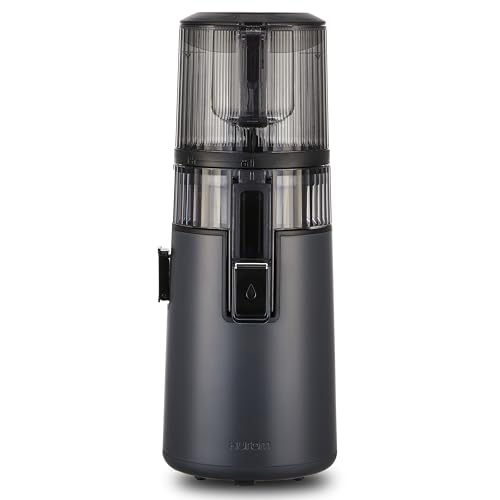
Hurom specifies a self-feeding hopper, 15.2-ounce chamber, two-part Easy Cleaning Multi Auger, 6.8-by-8.5-by-17.2-inch body, 14.8-pound weight, and up to 30 minutes of continuous use. The narrower depth can simplify a permanent counter station, while the weight argues against daily cabinet lifting. Its strainer-free auger removes a conventional fine-screen task but still requires separation, rinsing, inspection, and drying.
Choose H70 when staged loading and the two-part auger directly reduce daily friction. Hurom’s quiet, low-pulp, yield, and scrub-free wording is manufacturer positioning, not a tested cross-brand ranking. Easy Clean also is not the same as an automatic dishwasher claim.
Best narrow mesh-free slow juicer: Cuisinart CSJ-300
Cuisinart documents the CSJ-300P1 family at 10.24 inches long by 6.97 wide by 18.27 high, with a mesh-free filter and top-rack dishwasher-safe removable parts. The narrow body can support daily counter access when cabinet clearance has been measured. Its controlled slow-auger path fits mixed produce, greens, and documented nut use better than a fast centrifugal basket.
The mesh-free design relocates cleanup rather than deleting it. Rinse the auger, filter surfaces, bowl, outlets, seals, containers, and other approved parts before residue dries. Match the exact Amazon offer to the P1 instructions before relying on included components or care rules.
Best fast daily firm-produce route: Breville BJE430
Breville’s Juice Fountain Cold BJE430 uses an 850-watt centrifugal system, three-inch chute, stainless-steel cutters and micro-mesh basket, overload indicator, 70-ounce seal-and-store jug, and direct-to-glass nozzle. It fits a daily routine dominated by apples, carrots, beets, cucumber, and similar firm produce when processing speed matters more than slow-auger control.
It is not a masticating cold press despite “Cold” in the product name. Expect high-speed sound, foam, separation, a large jug, and immediate basket brushing. The three-inch chute can reduce cutting for compatible shapes, but the exact manual still governs pits, stems, rind, peel, and preparation. Breville’s storage wording is manufacturer guidance for its jug, not a general food-safety rule.
Best slow vertical specialist: Omega VSJ843QS
Omega specifies 43-RPM operation, a dual-edge single auger, automatic pulp ejection, and a no-drip juice tap for the VSJ843Q family. The exact verified Amazon offer is the silver VSJ843QS configuration. The vertical format saves horizontal counter length and supports an orderly mixed-produce routine, including manufacturer-listed greens and wheatgrass uses.
The 19.8-pound system should remain accessible rather than move from a difficult cabinet each day. Its screen, bowl, tap, auger, seals, outlets, and containers still need prompt model-specific care. RPM identifies the auger speed; it does not independently prove sound, yield, nutrition, taste, durability, or overall quality.
Design a ten-minute closing routine
As soon as the final ingredient clears, stop and unplug as directed, close or move the juice cap correctly, discard loose pulp, and take approved food-contact parts to the sink. Rinse residue before it dries, brush only from permitted directions, inspect outlets and seals, and place parts where air can circulate. Keep the motor base and cord dry. A fixed brush location and drying rack can matter more than a secondary feature.
Do not postpone a difficult screen until evening if pulp will harden. If the household cannot clean immediately, choose a mechanism with a simpler residue path or make a smaller session. Daily use is sustainable when the closing sequence is as predictable as the recipe.
Rotate ingredients without changing the mechanism’s job
Variety should stay inside the machine’s documented range. A daily cold press can alternate mixed produce, greens, and roots with model-specific preparation. A centrifugal basket can vary firm fruits and vegetables but does not become a greens specialist because one recipe includes spinach. A citrus reamer remains the better daily answer for a citrus-only household even though it is not on this mixed-produce shortlist.
Change one variable at a time when a recipe causes foam, wet pulp, clogging, or slow flow. Adjust piece size, feeding pace, ingredient order, or pulp setting only within the exact instructions. Persistent leaking, abnormal noise, odor, heat, or mechanical trouble belongs with model support, not an improvised workaround.
Keep everyday juice handling evidence-aware
Fresh juice is untreated unless it receives a validated treatment. FDA guidance explains that raw produce can carry bacteria into juice. Wash hands, inspect and rinse produce, use clean cutting tools and food-contact parts, and refrigerate juice promptly in clean covered containers. A low auger speed, anti-drip cap, or “cold” name does not pasteurize the drink.
People at higher risk from foodborne illness need particular care. Use current public-health guidance and appropriate clinical advice rather than wellness marketing. Daily juicing can be a practical kitchen habit, but the appliance does not guarantee a health outcome, a nutrient advantage, or universal safety.
Sources and further reading
Models relevant to this decision
As an Amazon Associate, we may earn from qualifying purchases.



Frequently asked questions
What makes a juicer good for daily use?
The complete routine must fit the day: ingredient preparation, controls, feeding, pulp handling, cleanup, drying, reassembly, and accessible storage.
Is a self-feeding hopper necessary for daily juicing?
No. It helps when active loading is the bottleneck, but a conventional-feed model can be quicker overall for one modest serving and may occupy less space.
Does mesh-free mean no cleaning?
No. It removes or changes a conventional screen but leaves the auger, chamber, outlets, seals, containers, and narrow paths to rinse, inspect, dry, and reassemble.
Is lower RPM always better for daily use?
No. RPM describes one part of a mechanism. Ingredient fit, preparation, screen access, pulp flow, controls, footprint, and cleanup determine the repeatable experience.
Can daily fresh juice be stored without refrigeration?
Do not assume that. Fresh juice is untreated unless validated treatment occurs. Follow current food-safety guidance and refrigerate promptly in clean covered containers.
Final verdict
For best juicers for daily use, compare Ninja NeverClog JC151 and Hurom H70 only after the ingredient, working-space, and cleanup requirements pass. The better choice is the model whose documented tradeoff fits the routine you will actually repeat.