Hard produce is not one ingredient category
Carrots and beets are dense roots, but their diameter, moisture, shape, and fiber differ. Ginger and turmeric are smaller, knobbier, and often processed in concentrated amounts. Apples and cucumber are firm or high-moisture ingredients that can dominate a faster recipe. Sweet potato and other very dense foods require exact manufacturer approval rather than assumption.
Begin with the recipe ratio. A pitcher built mostly from carrots, apples, beets, and cucumber points toward a centrifugal basket. A small ginger-turmeric serving or a mixed recipe led by greens and celery points toward a slow auger. Mechanism should follow the repeated job; wattage, finish, or a large accessory set should only separate machines that already fit.
Centrifugal wins the fast firm-produce lane
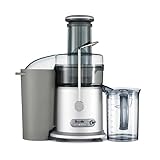
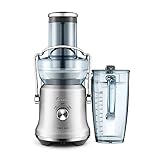
A centrifugal juicer uses a fast cutting disc and mesh basket. Structured produce gives the disc material it can shred consistently, while a broad chute can reduce repetitive cutting. Breville Juice Fountain Plus is the balanced everyday choice, Breville Compact prioritizes a smaller station, Breville Cold Plus pairs a 3.5-inch chute with a high-capacity vessel, and Hamilton Beach Big Mouth is the value entry.
The tradeoffs are basket noise, foam, a different finished texture, and immediate mesh cleaning. A large chute does not make every carrot or beet a whole-feed ingredient. Curved, oversized, damaged, or awkward produce still needs trimming or cutting within the exact manual, and pits, stones, hard stems, stickers, and excluded material must be removed.
Slow augers win mixed roots and fibrous recipes
Ninja JC151 is the approachable cold-press alternative when carrots or beets share the batch with greens, celery, cucumber, or fruit and adjustable pulp matters. Omega All-in-One provides deliberate horizontal control for ginger, roots, greens, and a broader supported nutrition-system routine. Both trade the raw pace of a centrifugal basket for a more controlled feed path.
Slow is not automatically high-yield, quiet, or easy to clean. Auger geometry, screen, pulp outlet, bowl, seals, feed pace, ingredient condition, and correct assembly shape the result. Compare the actual parts and normal session rather than using RPM as a universal quality score.
Twin gear belongs to committed root-and-greens users
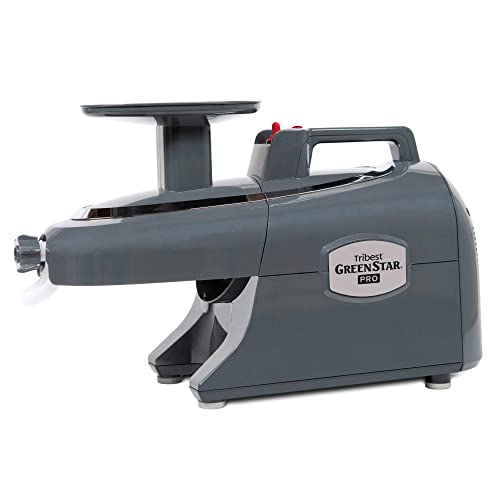
Tribest identifies hard roots such as carrots and ginger across the Greenstar family, and Greenstar 5 specifically lists root vegetables and ginger. Greenstar Pro adds all-stainless jumbo twin gears and adjustable pressure hardware. These models are relevant when roots share the station with wheatgrass, leafy greens, or celery often enough to justify a specialist horizontal workflow.
Matched gears, screens, pressure components, and housing surfaces require alignment and detailed cleaning. Two gears are not necessary for a straightforward carrot-apple pitcher, and professional naming does not prove restaurant certification. Compare exact manuals, voltage, included configuration, parts path, working space, and cleanup before choosing specialist construction.
Safe preparation starts before cutting
Wash hands, tools, boards, and approved juicer parts. FDA guidance recommends rinsing produce thoroughly under running water and scrubbing firm produce with a clean produce brush when appropriate; soap, detergent, and commercial produce wash are not recommended. Cut away damaged areas and discard produce that looks rotten. Wash produce even when a peel may later be removed so surface material is not transferred by the knife.
Trim roots and remove non-food material. Peeling is a recipe, condition, and model question rather than a universal requirement. Prepare a stable board, cut away from the hand, and make pieces that fit without wedging or hard pressure. The exact manual controls maximum size, ingredient approval, pusher use, and safety locks.
Feed dense produce without turning pressure into force
Firm produce can make a motor sound more loaded than cucumber or citrus, but a normal sound change should not be interpreted without the manual. Let the machine take one manageable section before adding another. Use only the supplied pusher, maintain the documented pressure, and keep hands and utensils out of the powered opening.
Stop if pulp or juice movement changes sharply, material rises, the basket or auger stalls, the unit leaks, or there is grinding, unusual heat, smoke, or electrical odor. Do not add a harder ingredient to ram a blockage. Use only the documented reverse or shutdown procedure, then unplug and inspect as instructed.
Recipe sequence changes flow and texture
In mixed recipes, alternate compatible textures while the machine is flowing normally. A high-moisture ingredient can help move residual root pulp, while a firm piece can follow softer produce when the manual permits. That planned sequence can reduce abrupt loads and screen buildup, but it should never become a substitute for correct cutting or a response to a stopped outlet.
Keep recipe ingredients separate when evaluating the machine. A carrot-beet-apple glass cannot establish pure beet or ginger performance, and added water-rich produce changes volume, sweetness, foam, body, and apparent yield. Record the actual recipe when comparing sessions.
Compare yield and waste with a repeatable method
A universal dry-pulp or extraction percentage is unreliable because produce variety, age, moisture, trimming, starting weight, screen, basket, pressure, feed pace, foam, retained liquid, and measurement technique differ. Wet pulp can indicate a setup or feed issue, but squeezing one handful does not quantify the complete system. More suspended pulp can also make the liquid measurement look larger.
Use equal prepared weights, the correct configuration, the same vessel, and several ordinary batches. Record output, texture, visible pulp, preparation, active feeding, interruptions, retained material, and cleanup. The best machine is the one that balances acceptable recovery with a process that fits the household's normal schedule.
Basket and screen cleaning decide daily usability
Carrot and beet particles can lodge in a centrifugal basket; ginger and turmeric fibers can remain in auger grooves, screen mesh, seals, outlets, and pressure parts. Beet and turmeric pigments can color light surfaces. Prompt cleaning is easier than dried residue. Disassemble in the documented order, brush approved surfaces, rinse allowed parts, and dry fully before reassembly.
Dishwasher claims are exact-model and exact-part facts. Never generalize removable into dishwasher-safe. Keep the motor base and cord dry, avoid unapproved abrasives or chemicals, and inspect mesh, seals, locks, and containers for damage. A screen that is difficult to reach can become a bigger daily bottleneck than cutting produce.
Measure the hard-produce workstation, not just the appliance
Dense roots need a stable cutting board, a safe knife area, a bowl for prepared pieces, a vessel for juice, a pulp container, and a clear route to the sink. A compact centrifugal body may still need room above the chute and beside the pulp outlet. A horizontal auger or twin-gear machine needs counter length and front clearance for its complete food path.
Measure lid travel, pusher access, container removal, cord reach, cabinet height, brush storage, and drying space. Then decide whether the machine can remain accessible or must be lifted for each batch. The faster extraction mechanism can lose its practical advantage if setup and basket washing dominate; the specialist slow machine can become unreasonable if its gear housing and screens crowd a small sink.
Final hard-produce decision
Choose Breville Plus for balanced fast juicing, Breville Compact for smaller counters, Breville Cold Plus for broad-chute batches, or Hamilton Beach for value when firm produce dominates. Choose Ninja JC151 for an approachable mixed cold-press routine or Omega All-in-One for deliberate horizontal root control. Choose Greenstar Pro or Greenstar 5 only when roots, greens, and fibers justify twin-gear ownership.
Verify the exact model, manual, approved ingredients, piece size, operating limits, vessels, screen or basket, pulp capacity, working dimensions, seller, current availability, price, and return terms. Then map the full session from washing and cutting through feeding, stopping, brushing, drying, and storage. The correct mechanism should make the repeated recipe easier rather than merely sound more powerful.
Sources and further reading
Models relevant to this decision
As an Amazon Associate, we may earn from qualifying purchases.




Frequently asked questions
Is centrifugal or cold press better for carrots and beets?
Centrifugal is the practical starting point when firm produce dominates and speed matters. Cold press is stronger when roots support recipes led by greens, celery, or smaller concentrated servings.
Can I put a whole carrot or beet into a wide chute?
Do not assume so. Follow the exact manual and cut curved, oversized, damaged, or very dense produce into pieces that enter without force.
Do I need a twin-gear juicer for ginger?
No. Twin gear can suit a committed roots-and-greens station, while a simpler horizontal single auger may be easier for ordinary ginger shots.
Why is root-vegetable pulp wet?
Produce moisture, screen condition, assembly, pressure, feed pace, and retained liquid all matter. Repeat a controlled test before concluding the machine is defective.
Can turmeric or beet stain parts?
Their pigments can discolor some light or porous surfaces. Rinse promptly and use only care methods approved for the exact part.
Are hard-produce juices automatically healthier?
No health outcome is guaranteed by ingredient or machine type. JuicerPress compares appliance workflow and does not make treatment, prevention, or detox claims.
Final verdict
For best juicer for carrots, beets, ginger, and hard produce, compare Breville Juice Fountain Plus and Breville Juice Fountain Compact only after the ingredient, working-space, and cleanup requirements pass. The better choice is the model whose documented tradeoff fits the routine you will actually repeat.