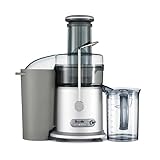
Compare five exact slow-auger, twin-gear, and centrifugal juicers for grapes by small-batch retention, skin and seed handling, pulp texture, feed pace, screen access, and model identity.
Seedless or properly prepared grapes, grape-led mixed juice, and berries paired with compatible higher-moisture produce.
Choose controlled slow extraction for grape- and berry-led recipes or fast basket extraction when grapes support a larger structured high-moisture batch.
Curated recommendations
Our juicers for grapes shortlist
5 matched picks
As an Amazon Associate, we may earn from qualifying purchases.
Seedless table grapes, seeded grapes, thick skins, and overripe fruit do not behave identically. Sort spoiled fruit and prepare stems and seeds according to the exact manual.
Pouring a full bowl of small fruit can load a screen or auger quickly. Use modest portions and watch both outlets.
Small batches expose retained volume
A large bowl can keep a meaningful share of a small serving around its screen or outlet. Compare recovery and cleanup at the amount actually made.
Supporting apple, pear, cucumber, or citrus changes the volume and cannot be hidden inside a grape-yield claim.
Choose pulp control or speed intentionally
Ninja, Omega, and Greenstar paths favor controlled soft-fruit feeding. Breville Plus is the fast alternative when firmer high-moisture produce dominates.
Judge the complete stirred batch because skins, foam, suspended pulp, and early versus late output affect texture.
Clean skins and seeds promptly
Rinse and brush approved components before residue dries, inspecting mesh, auger grooves, seals, outlets, and the pulp path.
Follow model-specific dishwasher guidance and keep the powered base dry.
Choose a model pathway
Juicers for Grapes separates the shortlist into 4 practical routes: household pulp control, deliberate slow-auger paths, fast mixed high-moisture batches, specialist twin gear. Start with the route that matches the dominant routine, then read its exact model review before opening the retailer listing.
Household pulp control
Two filters support a clearer texture decision for grape-led mixed recipes.
Start with Ninja for pulp choice or Omega for controlled feeding, choose Breville only when grapes support a faster structured batch, and reserve Greenstar for a broader specialist routine. Small-batch recovery and screen cleaning should decide more than hopper size.
Use the Juicer Finder to test the ingredient, routine, space, and budget decision before purchasing.
Frequently asked questions
Can grapes be poured into a juicer all at once?
Use modest portions. A sudden bowlful can load the screen or feed path faster than skins and pulp exit.
Should grape stems and seeds be removed?
Follow the exact model and recipe guidance; do not assume universal acceptance.
Is a blender better for grapes?
Use a blender when retaining skins and more whole-fruit texture is the goal; use a juicer for separated liquid.
Why is grape juice foamy or pulpy?
Mechanism, fruit condition, skins, seeds, filter choice, feed pace, and suspended solids affect the result.