Define the service before comparing machines
Write down the primary ingredient, supporting ingredients, portions per batch, batches per session, and days per week. Then describe the actual setting: a serious home kitchen, entertaining station, community event, office, or proposed food operation. Those details establish the job. A vague goal such as more juice or heavy duty cannot separate a fast basket from a slow auger or a citrus lever.
Include the busiest realistic session rather than a dream scenario. If ordinary use is two home pitchers, an oversized station can add friction without useful capacity. If several batches must follow one another, the documentation, pulp path, vessels, cleaning turnover, and operator routine become more important than appearance. Build the specification from repeated work rather than the product label.
Separate commercial-style from verified commercial use
Commercial-style can describe a substantial frame, large hopper, batch container, stable lever, or design associated with a dedicated station. It is not a certification. It does not establish sanitation compliance, continuous-duty approval, intended business use, electrical listing, or warranty coverage. Retail titles can use similar words for products with very different documentation.
For a regulated or public-facing operation, identify the exact model and ask the manufacturer for current intended-use, operating, cleaning, installation, and warranty documentation. Independently confirm equipment and local requirements with the applicable authority before purchase. JuicerPress compares shopping workflows; it does not approve a machine for a restaurant, juice bar, school, healthcare setting, or other business.
Choose the mechanism around the ingredient path
A slow auger grips and compresses approved produce through a screen. A self-feeding hopper can reduce repeated loading, which is useful when mixed recipes and deliberate extraction matter. A centrifugal basket shreds and separates quickly, favoring firm-produce pace but creating a different noise, foam, pulp, and basket-cleaning routine. A manual lever presses prepared citrus without a motor.
None is the universal commercial choice. The lever cannot process carrots or greens. The centrifugal machine is not automatically the best route for fibrous, leafy, or mixed slow-juice recipes. The batch hopper does not become unattended or unlimited because it holds more produce. Trace the dominant ingredient from preparation to waste, then remove every mechanism that cannot perform that job within its instructions.
Turn batch size into a complete process map
List each step: receive or retrieve produce, wash, inspect, remove excluded material, cut, stage, load, extract, monitor, pour, change vessels, empty pulp, clear residue, wash, dry, and reassemble. Assign space and time to each step. The extraction motor may occupy only part of the cycle, so advertised speed alone cannot predict station throughput.
Mark the likely interruption points. A juice jug can fill before the hopper empties. A pulp bin can need removal before a large recipe ends. A fine screen can require prompt attention. A manual press needs a new portion and controlled lever movement for every fruit. The best capacity feature is the one that removes the bottleneck in this specific map.
Use documented operating limits, not assumptions
Read the exact manual for run time, rest time, approved ingredients, feed size, assembly, safety locks, stall response, cleaning, and storage. A large vessel, wide chute, heavy base, powerful motor description, or premium price does not prove continuous operation. If the intended session exceeds the documented limit, choose another plan rather than hoping the machine tolerates it.
Manual presses remove motor heat from the equation but not operating limits or fatigue. A repeated batch still involves loading, clearing, handle control, strainer cleaning, and vessel changes. Stop for rocking, binding, cracking, loose hardware, or abnormal movement. A commercial workflow is repeatable only when it remains inside both the appliance instructions and the user's safe, controlled routine.
Compare the five verified JuicerPress pathways
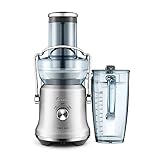
Omega Hands-Free Wide Hopper is the mixed-produce batch-loading path, with a slow extraction format and reduced active feeding as its central advantage. Breville Juice Fountain Cold Plus is the fast firm-produce path, using a large chute, two speeds, and batch-friendly capacity. Their mechanisms, texture, noise, preparation, pulp handling, and screen cleanup differ, so neither should be called a universal winner.
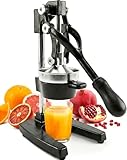
Zulay, CO-Z, and Eurolux are motor-free lever paths for prepared citrus. Zulay is the balanced station, CO-Z the value-focused heavy-format option, and Eurolux the larger premium position. These roles describe the verified catalog and shopping fit, not restaurant approval, permanent price rank, measured yield, or firsthand testing.
Measure capacity beyond the hopper or chute
Record feed opening, processing chamber, juice vessel, pulp container, outlet clearance, and the amount of residue the screen or strainer can hold before attention is needed. Larger input capacity does not help when a smaller downstream container forces a stop. Plan a safe vessel change and a location for finished juice before loading the next batch.
For a manual press, capacity is fruit-cup fit, receiving-glass clearance, repeated lever cycles, strainer access, and the speed of removing spent rind. Confirm the approved preparation and portion size. A tall, heavy frame may support a dedicated station while still working one fruit portion at a time. Compare the whole sequence rather than one impressive dimension.
Lay out the working station at full scale
Measure counter width and depth, operating height, hopper or lid opening, manual-handle arc, container removal, pulp-bin access, cutting-board space, waste bowl, and travel to the sink. Mark those areas with paper or tape. A machine that fits while closed may become unusable when an upper cabinet blocks loading or a wall prevents a bin from sliding out.
Add drying space for every removable part and a protected location for documentation and brushes. Keep powered bases, cords, and plugs away from water as directed. Place manual presses on a suitable sturdy surface with a clear handle and linkage zone. The layout should guide each user from clean produce to finished juice without crossing wet parts and fresh ingredients unnecessarily.
Make cleanup part of the throughput budget
Screens and centrifugal baskets trap fine fiber; pulp exits and seals can hold residue; citrus strainers catch seeds and membrane; pressing cups collect sticky juice and rind oils. Prompt cleaning keeps the next batch from beginning with dried material. Compare access to the complete food path, not merely the number of pieces shown in a listing.
Use only the washing method stated for the exact part. Removable does not mean dishwasher-safe, and stainless-steel language for a cup or finish does not describe every surface. Do not submerge a frame or powered base unless the manufacturer explicitly permits it. Time washing, inspection, drying, and reassembly during a conservative practice run before promising a service pace.
Plan pulp, foam, and serving vessels
Each mechanism produces a different waste and serving rhythm. Firm-produce centrifugal batches can fill a pulp container and create foam that the household may prefer to skim. Slow extraction can produce a different texture while fibrous recipes load screens and outlets differently. Manual citrus pressing creates spent halves, seeds, membrane, and drips around the cup and receiving vessel.
Position a waste container, spare approved vessel, serving pitcher, and cleaning tools before starting. Do not force produce or reprocess pulp outside manufacturer guidance to chase a drier appearance. Freshness, ripeness, cutting, feed pace, screen condition, and recipe all affect apparent yield. Judge several ordinary batches rather than a single demonstration.
Consider noise, motion, and multiple users
A large centrifugal basket usually makes a different sound from a slow auger. A manual lever removes motor noise but asks for repeated raising, loading, pressing, and clearing. Choose the motion and sound that fit the setting without sacrificing the correct ingredient mechanism. An open kitchen or early-morning household can value quieter operation, while a time-focused firm-produce routine may accept more sound.
If several people use the station, write one operating sequence based on the manual. Standardize assembly checks, approved preparation, loading, stopping, pulp removal, and cleaning. Never bypass locks, reach into the feed path, substitute an unapproved pusher, or place hands near a lever linkage. Stop for leaks, unusual odor, heat, grinding, damage, or repeated stalls and follow support guidance.
Verify support, wear parts, and warranty
Screens, baskets, strainers, seals, containers, pushers, brushes, and cups can be model-specific. Find the official support route and determine whether ordinary replacement parts are documented for the exact model. Similar names, colors, and retailer bundles do not make components interchangeable. Keep the model and purchase information after setup.
Read warranty and intended-use terms before assuming frequent use is covered. A premium price, cast frame, or commercial word does not extend the written terms. If support or replacement access is essential, confirm it before purchase rather than relying on an old review. Serviceability creates value only when the right component and guidance are available when needed.
Compare value without publishing a stale price
Current seller, price, availability, color, bundle, and included accessories can change on Amazon. JuicerPress therefore avoids a static price. Compare the least expensive candidate that satisfies the ingredient mechanism, batch process, documented limits, space, cleaning, support, and any required approval. A cheaper wrong mechanism and a premium unused capacity are both poor value.
Read the internal product review to understand each model's workflow and tradeoff, then open its verified Amazon destination to confirm exact identity and current terms. Treat accessories as useful only when they serve a repeated step. Do not pay extra for commercial styling, a finish, or a larger container unless it removes a named bottleneck in the process map.
Run a conservative first-week capacity trial
Before the first batch, read the manual, wash approved food-contact parts, assemble the machine dry, and practice placing each vessel. Begin with a simple approved recipe below the planned maximum. Record produce preparation, active loading, extraction, pulp and vessel interruptions, washing, drying, and reassembly. Do not use the first session to test every ingredient or the longest possible run.
Repeat a few ordinary batches within documented guidance. Adjust cutting and staging only as permitted, and keep tools in fixed places. If the station cannot meet the expected pace without rushing, forcing, skipping cleaning, or exceeding operating limits, revise the menu, volume, staffing, or equipment plan. A small controlled trial is more informative than an unsupported capacity claim.
Final commercial-style juicer checklist
Choose Omega Hands-Free for a mixed-produce batch-hopper workflow, Breville Cold Plus for faster firm-produce batches, or a Zulay, CO-Z, or Eurolux lever for a motor-free citrus station. Confirm approved ingredients, complete batch cycle, working dimensions, vessels, pulp route, cleaning, user motion, support, and exact Amazon listing.
For any business or regulated setting, stop before purchase until the manufacturer confirms intended use and documentation and the applicable authority confirms requirements. Do not infer certification from a title or from this collection. The strongest purchase is the simplest verified system that can repeat the real job safely, cleanly, and within stated limits.
Models relevant to this decision
As an Amazon Associate, we may earn from qualifying purchases.



Frequently asked questions
What should I look for in a commercial-style juicer?
Match mechanism to the menu, then verify the complete batch cycle, documented operating limits, vessels, pulp handling, workstation, cleaning, support, intended use, and current model identity.
Does a commercial label mean continuous duty?
No. Only current manufacturer documentation for the exact model can establish operating and rest limits. Size, weight, motor language, or price cannot substitute for that documentation.
Which type is best for a small juice routine?
Use a batch-hopper slow auger for mixed produce, a large centrifugal model for faster firm produce, or a manual lever for prepared citrus. The menu decides.
How do I calculate real capacity?
Measure preparation, loading, extraction, vessel changes, pulp clearing, cleaning, drying, and reassembly—not extraction time alone.
Can I use these products in a restaurant?
JuicerPress does not make that determination. Verify intended use, certification, warranty, installation, cleaning, and applicable local requirements for the exact model before any regulated business use.
Final verdict
For commercial juicer buying guide for serious home and small-batch use, compare Omega Hands-Free and Breville Juice Fountain Cold Plus only after the ingredient, working-space, and cleanup requirements pass. The better choice is the model whose documented tradeoff fits the routine you will actually repeat.