The real comparison is routine versus capacity
Home and commercial-style are not two precise technical classes. Household machines can be capable, and substantial-looking products can still have household intended use. The useful comparison begins with what one normal session asks the appliance and operator to do. Ingredient mechanism, portions, consecutive batches, prep, vessels, pulp, cleaning, counter space, and documentation matter more than the category name.
A home juicer wins when it completes the regular job without exceeding limits or creating repeated interruptions. Commercial-style capacity earns its footprint only when it removes a documented bottleneck. If no bottleneck can be named, a larger machine may simply add weight, parts, cleaning area, and cost.
When an ordinary home juicer is enough
Stay with a home format when batches are modest, sessions have natural pauses, the feed opening matches acceptable preparation, containers hold the expected serving, and cleanup fits the household schedule. Compact equipment can be easier to retrieve, rinse, dry, and store. Frequent use often depends more on low friction than maximum theoretical capacity.
A home machine is not a lesser choice when it suits the ingredients. A compact slow juicer may serve a mixed morning glass better than a large centrifugal station. An electric citrus reamer may beat a cast lever for one lemon or two oranges. Choose the smallest system that reliably completes the repeated job within its manual.
When commercial-style capacity can help
Consider a larger or more substantial format when the current machine repeatedly requires active loading, too many vessel changes, awkward pulp pauses, slow firm-produce processing, unstable manual squeezing, or an impractical number of small sessions. The upgrade should target one of those measurable problems. Capacity that does not change the process is not an upgrade.
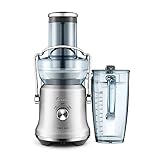
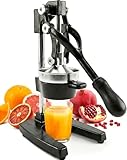
Omega Hands-Free targets mixed-produce batch loading. Breville Cold Plus targets faster firm-produce work with larger batch-oriented features. Zulay, CO-Z, and Eurolux target motor-free lever pressing for prepared citrus. These are three separate solutions, not levels on a universal performance ladder.
Ingredient scope can reverse the decision
A commercial-style manual press can feel substantial yet remain a narrow citrus and pomegranate specialist. It cannot grind carrots, move celery through an auger, or shred apples in a basket. An all-produce electric machine expands ingredient scope but may be unnecessary when every session is orange or grapefruit.
Write the weekly produce list in frequency order. Select the mechanism that handles the first items within the manufacturer guidance. Supporting ingredients then separate models inside that mechanism. Do not choose a large press because it looks durable when the menu requires mixed vegetables, and do not accept an all-produce cleanup routine when halved citrus is the only job.
Speed and throughput are not the same
A centrifugal basket may extract firm produce quickly, but preparation, pulp removal, pouring, basket cleaning, and drying still count. A slow auger can take longer during extraction while a batch hopper reduces active loading. A manual lever has no motor speed at all; throughput depends on fruit preparation, controlled pulls, strainer clearing, and vessel handling.
Compare one complete cycle from clean whole produce to a clean reassembled station. Then test consecutive cycles only within documented limits. JuicerPress does not convert a motor speed or container size into a universal cups-per-hour promise because ingredients, users, and cleaning plans change the outcome.
Duty cycle is a documentation question
Commercial appearance does not show how long a motor may run or whether rest periods are required. Read the exact operating instructions. Watch for maximum run guidance, cooling or rest requirements, pulp-container capacity, screen clearing, assembly locks, and the stated response to jams or overheating. If documentation does not support the planned session, choose another model or reduce the plan.
A manual lever removes motor duty but introduces repeated physical cycles and mechanical inspection. The user must raise, load, press, release, clear, and repeat without rushing or placing hands near pinch points. Neither format should be described as continuous duty without explicit support.
Counter space favors the home machine more often than expected
Commercial-style capacity needs working room, not only storage width. Include hopper or lid opening, handle arc, cutting board, clean produce, juice and pulp vessels, waste, container removal, sink travel, and drying parts. A product photograph rarely shows the complete station.
A smaller home machine can win because it stays accessible and leaves room to prepare ingredients safely. A larger format wins only when the kitchen can dedicate the necessary surface without crowding another step. Mark the full station before purchase and test upper cabinets, walls, outlets, cords, and vessel clearances.
Cleanup can erase a capacity advantage
Larger baskets, screens, hoppers, cups, strainers, pulp bins, and vessels can increase sink and drying requirements. Fine fiber and citrus residue become harder to remove after drying. A fast extraction phase followed by a long, awkward wash is not automatically a higher-throughput system.
Compare how food-contact parts detach, which tools reach the mesh or outlet, what must be hand-washed, and where components dry. Use the exact manual; removable is not the same as dishwasher-safe. A home juicer with a familiar five-minute routine may outperform a larger station that users postpone cleaning.
Noise and physical effort create different tradeoffs
Centrifugal machines generally create a faster, more audible operating rhythm than slow augers. Manual presses remove motor noise but require repeated handle movement and a stable surface. Home electric reamers can reduce the scale and weight of a citrus station while keeping motorized motion.
Choose based on the actual room and user. Early mornings, conversation, nearby work, mobility, counter height, and the number of servings all matter. JuicerPress does not make medical or ergonomic promises. If a movement is unsuitable for a user, assess it safely and choose a different mechanism rather than assuming a longer lever solves every concern.
Materials and weight do not prove compliance
A cast frame can add stability. A stainless-steel cup or exterior can be useful. Neither tells you the composition, cleanability, or approval of every food-contact component. Confirm screens, bowls, strainers, seals, outlets, coatings, and the stated cleaning method for the exact configuration.
For business use, verify any required equipment listing, electrical or installation requirements, sanitation procedures, and local acceptance independently. Product names containing commercial grade or professional do not settle those questions. JuicerPress deliberately keeps the five verified Amazon models in a commercial-style shopping collection without representing them as certified restaurant equipment.
Support and warranty matter more under frequent use
A household schedule can make a missing screen or seal inconvenient; a repeated small-batch schedule can make it a hard stop. Identify the manufacturer support route, exact model number, current manual, ordinary wear parts, and replacement availability before choosing. Similar-looking variants may use different components.
Read the intended-use and warranty terms. Business use may be treated differently, and JuicerPress does not extend a warranty or promise coverage. A larger purchase makes sense when documentation and support match the planned routine—not when the shopper merely assumes substantial construction will prevent every interruption.
Price cannot make the wrong class right
A higher current price does not establish higher capacity, better fit, certification, or longer life. A lower price is not value if the mechanism fails the ingredients or the station cannot be cleaned. Amazon prices, sellers, bundles, and availability change, so compare current listings only after the workflow shortlist is complete.
Calculate value around friction removed. Does the hopper reduce active loading? Does the larger centrifugal path shorten a firm-produce session? Does the lever replace repeated hand squeezing for a real citrus batch? If the answer is unclear, keep the simpler home format. Pay for a specific repeated improvement rather than the commercial word.
Scenario: mixed produce for a household
For mixed produce, vegetables, and recipes that benefit from slow extraction, Omega Hands-Free offers the commercial-style path in this collection. Its wide hopper and hands-free batch orientation can reduce active loading, but it still requires approved preparation, monitoring, container management, screen cleaning, and adherence to operating instructions.
A household making smaller servings may prefer a more compact cold press model elsewhere on JuicerPress. Choose Omega only when batch loading solves an ordinary problem and the larger working and cleaning footprint fits. Commercial-style here describes the workflow advantage, not a restaurant rating.
Scenario: firm produce and batch pace
For apples, carrots, and other approved firm produce as the dominant routine, Breville Juice Fountain Cold Plus offers the faster centrifugal path. Its large chute, two speeds, and batch-friendly capacity can reduce preparation or extraction friction. The tradeoff is a larger station with basket cleaning, noise, pulp, and vessel planning.
A compact home centrifugal model may remain the better choice for one or two glasses and limited counters. Move up only when the larger capacity and chute change a repeated firm-produce cycle. Do not infer continuous commercial duty from the batch-oriented design.
Scenario: a dedicated citrus station
Zulay, CO-Z, and Eurolux use heavy manual lever formats. They can suit repeated prepared citrus when quiet operation, controlled pressure, and a permanent station matter. Zulay is the balanced pathway, CO-Z the value-focused heavy format, and Eurolux the larger premium position.
A compact electric reamer can be better for light household servings, cabinet storage, or users who do not want repeated lever movement. A manual press becomes the commercial-style choice only when its fruit cup, full handle arc, stable base, vessel, waste path, and cleaning method fit. None is presented as automatically certified for food service.
Final decision: upgrade only for a named bottleneck
Keep a home juicer when it handles the ingredient list, ordinary and peak household batch, documented operating limits, counter, vessels, pulp, and cleanup. Choose commercial-style only when the Omega batch hopper, Breville firm-produce pace, or manual lever station removes a repeated and measurable problem. Read the internal model reviews before checking current Amazon listings.
For any business or regulated use, independently confirm the exact model's intended use, operating documentation, cleaning, warranty, certification, installation, and local requirements. If those facts are uncertain, do not purchase on the strength of a retailer title. Bigger is useful when it makes the right workflow repeatable; it is not permission to assume a different equipment class.
Models relevant to this decision
As an Amazon Associate, we may earn from qualifying purchases.



Frequently asked questions
Is a commercial-style juicer always better than a home juicer?
No. A home juicer is better when it completes the repeated batch within documented limits with less space, cleaning, and storage friction. Upgrade only for a named bottleneck.
What is the biggest practical difference?
Commercial-style formats often emphasize batch loading, larger firm-produce capacity, or a substantial dedicated lever station. Real benefit depends on the complete prep-to-clean cycle.
Does a large motor mean continuous duty?
No. Only the exact manufacturer's documentation can establish run and rest limits. Motor language, weight, and container capacity cannot.
Which format is quietest?
A manual lever has no motor, while a slow auger generally creates a different sound profile from a centrifugal basket. Choose noise only after matching the ingredient and user motion.
Can I rely on commercial grade in an Amazon title?
No. Treat it as a claim to verify. Confirm intended use, documentation, certification, warranty, and applicable local requirements for the exact model.
Final verdict
For commercial juice press vs home juicer, compare Omega Hands-Free and Breville Juice Fountain Cold Plus only after the ingredient, working-space, and cleanup requirements pass. The better choice is the model whose documented tradeoff fits the routine you will actually repeat.