
Best Low-Prep Upgrade
Cold press
Omega Hands-Free
- Wide hopper
- Hands-free batch loading
- Slow extraction
Know before you buy: The larger hopper and premium design take more storage space and budget.
Compare commercial-style juicers for serious home and small-batch workflows by ingredient, full-cycle capacity, cleanup, space, and documented limits—not by an unverified commercial label.
See recommendations ↓Build a repeatable prep-to-clean station while keeping commercial styling separate from certification, continuous-duty approval, and local food-service requirements.
As an Amazon Associate, we may earn from qualifying purchases.
Cold press
Know before you buy: The larger hopper and premium design take more storage space and budget.
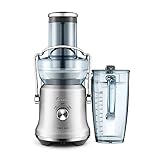
Centrifugal
Know before you buy: Its batch-ready capacity creates a larger overall countertop footprint.

Manual citrus press
Know before you buy: A heavy countertop press is stable in use but not convenient to move or store frequently.

Manual citrus press
Know before you buy: It is best suited to citrus and press-friendly fruit rather than fibrous vegetables.
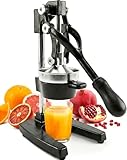
Manual citrus press
Know before you buy: The substantial cast-iron frame needs a dedicated, sturdy counter position.
JuicerPress uses commercial-style to describe machines whose capacity, stability, feeding method, or substantial construction can support serious home batches and some small-batch routines. It does not certify equipment for a restaurant, juice bar, school, healthcare setting, or other regulated operation. Retail names and visual design can suggest heavy use without proving the exact model's intended environment, operating limits, food-equipment listing, warranty coverage, or local acceptance.
That distinction protects the decision from a costly shortcut. A household preparing a weekend pitcher can reasonably value a large hopper or sturdy manual lever. A business must go further: verify the exact model number with the manufacturer, confirm documentation for intended use and cleaning, check any certification required by the applicable authority, and obtain guidance from the local regulator before purchase. None of the five products below is presented as restaurant-certified simply because it appears in this collection.
The first question is not how many watts or how much metal the appliance has. It is what enters the machine most often. Oranges and grapefruit need a different mechanism from carrots and apples; celery and greens behave differently from firm produce; mixed slow-juice recipes create another feeding and screen-cleaning pattern. List the primary ingredient, supporting ingredients, ordinary serving count, and busiest realistic session before comparing models.
A manual lever press is a specialist for prepared citrus and other press-suitable fruit such as pomegranate. A centrifugal basket favors rapid firm-produce processing. A slow auger favors controlled mixed-produce extraction and can accommodate more varied routines within the model instructions. Choose the ingredient path first, because a larger version of the wrong mechanism remains the wrong tool.
Useful throughput includes washing produce, inspecting and cutting it, loading, extracting, pouring, emptying pulp, rinsing or clearing the food path, and preparing for the next batch. A fast extraction phase can still produce a slow station when the basket takes time to clean or a small pulp container interrupts service. Conversely, a slower auger may reduce active loading when a self-feeding hopper fits the recipe.
Map one complete batch on paper. Identify which steps require a person, which can happen while the machine runs, and where the next ingredient or clean vessel waits. JuicerPress does not assign invented cups-per-hour figures to household listings. The honest comparison is between documented capacity and operating guidance, the physical workflow you can observe, and a conservative trial plan within the manufacturer's instructions.
A large hopper, powerful-sounding motor, heavy base, or commercial-looking frame does not prove continuous duty. Motors can have stated run and rest periods, pulp bins can fill, screens can load with fiber, juice vessels can reach capacity, and ingredients may require cooling or cleaning pauses. Read the manual for the exact model and configuration before planning consecutive batches.
If the manufacturer does not clearly support the intended duration or setting, do not convert marketing language into permission. Reduce the planned volume, choose another documented machine, or contact the manufacturer. For a manual press, the limiting rhythm shifts from motor heat to repeated loading, user motion, strainer clearing, vessel changes, and safe removal of spent fruit. The complete station still needs a realistic pause plan.
The Omega Hands-Free Wide Hopper represents mixed-produce batch loading through a slow-auger pathway. Its value is reduced active feeding and deliberate extraction, not a promise of unlimited unattended operation. The Breville Juice Fountain Cold Plus represents a large-chute, two-speed centrifugal pathway for shoppers prioritizing firm-produce pace and batch-friendly capacity. Its advantage comes with a larger footprint and a basket-centered cleaning routine.
Zulay, CO-Z, and Eurolux represent motor-free lever pressing for prepared citrus. Their cast frames and long handles suit a dedicated station, while their narrow ingredient scope makes them poor substitutes for all-produce machines. These paths should not be ranked on one scale. They solve different menus, motions, noise preferences, and cleanup routes.
Feed capacity is only one part of batch size. Compare the processing chamber, juice vessel, pulp bin, strainer, outlet, and any space where fibrous material can accumulate. A wide opening can reduce cutting but cannot prevent a downstream container from filling. Plan where finished juice goes and how a full vessel is swapped without interrupting safe operation or spilling across the base.
For manual presses, fruit-cup fit and glass clearance replace hopper capacity as the critical measurements. A larger frame can accommodate a substantial station yet still require one prepared portion at a time. Confirm the ordinary fruit size, approved preparation, receiving-vessel height, and waste container. Capacity is useful only when it removes the bottleneck that actually occurs in the intended routine.
Measure stored width, operating height, hopper or lid swing, manual-handle arc, produce-board space, container removal, pulp-bin access, and the path to the sink. Add room for clean parts to dry without crowding the next task. A machine that fits its footprint while closed may conflict with upper cabinets or become awkward once fruit, vessels, and waste surround it.
Place powered equipment only as the manufacturer directs and keep cords, plugs, and motor bases away from water. A manual press still needs a sturdy level surface and clear pinch zones. If the station is shared, the layout should make the normal safe action obvious: where prepared produce begins, where juice exits, where waste moves, and where used parts wait for cleaning.
Screens, baskets, strainers, pulp exits, seals, cups, and outlets hold different kinds of residue. Fine mesh can preserve texture while demanding prompt brushing. Citrus and pomegranate can leave sticky juice, seeds, rind oils, and membrane around a press cup. A fast machine with a difficult food path can lose its throughput advantage during repeated use.
Follow the exact washing and drying instructions for every component. Removable does not mean dishwasher-safe, a stainless-steel cup does not describe the whole appliance, and a manual frame is not automatically submersible. Plan sink space, an approved brush or cloth, a drying rack, and reassembly. Cleanup is complete only when the next batch can begin with correctly seated, fully dry parts.
A serious batch creates rind, peel, pits or excluded material, spent citrus halves, fiber, foam, and wet pulp. Decide which preparation waste is removed before juicing and where extracted pulp lands. A pulp container that is easy to pull and replace can reduce interruptions; an awkward bin beside a wall can make a theoretically large machine frustrating in practice.
Do not let the desire for a dry-looking pulp justify forcing produce, overloading the feed path, or repeatedly reprocessing material outside manufacturer guidance. Apparent yield changes with freshness, ripeness, cutting, feed pace, screen condition, and recipe. Compare the consistency and cleanliness of several ordinary batches rather than treating one dramatic demonstration as a capacity guarantee.
A centrifugal basket usually creates a different sound and pace from a slow auger, while a manual lever removes motor noise but adds repeated human motion. Consider early mornings, conversation, an open kitchen, nearby work, and the ability to hear an abnormal sound. Quiet operation is valuable only when the mechanism still fits the ingredients and batch target.
Every user needs the same assembly, loading, stopping, clearing, and cleaning sequence. Do not improvise with utensils, defeat safety locks, reach into a feed path, or steady a moving manual press near the linkage. If a stall, leak, unusual odor, heat, grinding, damage, or repeated jam appears, stop and follow the manufacturer guidance. A repeatable safe process matters more than shaving seconds from one batch.
Frequent use puts more importance on replacement screens, strainers, seals, containers, pushers, brushes, and other model-specific parts. Before purchasing, locate the manufacturer's support path and identify whether ordinary wear items are documented for the exact model. Similar product names or colors do not guarantee interchangeable parts.
Read the intended-use and warranty terms rather than assuming a premium price or substantial build expands coverage. Keep the model and purchase information, follow maintenance instructions, and inspect food-contact pieces and moving parts. A replaceable component can make ownership easier, but only when the correct part is actually available and supported.
Stainless-looking finishes and cast frames can be useful for durability and appearance, but they do not identify every food-contact material or establish sanitation performance. Confirm the exact bowl, screen, strainer, seals, outlets, coatings, and cleaning methods in current documentation. Do not extend a material claim for one removable component to the whole machine.
For any regulated or public-facing food operation, verify required equipment listings, sanitation procedures, installation constraints, electrical requirements, and local approval before purchase. The responsible answer can differ by jurisdiction and setting. JuicerPress provides a shopping framework and exact retailer routes; it does not approve equipment, certify a food-service plan, or replace the manufacturer or regulatory authority.
Amazon price, seller, bundle, availability, and included accessories can change, so JuicerPress does not publish a static number. Value comes from the useful bottleneck a machine removes: active feeding, firm-produce processing time, repeated hand squeezing, pulp interruptions, or an unsuitable cleanup route. A larger appliance is not better value when its capacity remains unused.
Read each internal model review first, then open the verified Amazon listing to confirm exact model identity, current configuration, seller, availability, price, and return terms. Compare the least expensive product that satisfies every non-negotiable requirement with the higher-cost alternatives. Do not pay for a commercial label, premium finish, or oversized station unless it changes the repeated workflow.
Record the primary ingredients, portions per batch, batches per session, preparation method, active loading preference, desired texture, pulp-container plan, juice-vessel size, maximum cleanup time, sink access, working dimensions, noise tolerance, storage, and manufacturer-stated operating limits. For a manual press, add fruit-cup fit, handle arc, counter stability, vessel clearance, and repeated user motion.
Eliminate any candidate that fails the ingredient mechanism, documented limits, station dimensions, or cleaning plan. For possible business use, pause the purchase until intended use, warranty, certification, and applicable local requirements are independently confirmed. Then choose among the remaining models by the one advantage that removes the most frequent bottleneck—not by the most impressive product name.
Commercial-Style Juicers separates the shortlist into 3 practical routes: mixed-produce batches with less active loading, faster firm-produce batch workflow, motor-free citrus and pomegranate stations. Start with the route that matches the dominant routine, then read its exact model review before opening the retailer listing.
Start with the Omega Hands-Free Wide Hopper when mixed-produce slow extraction and batch loading fit the routine. Verify ingredient preparation, hopper loading, vessel capacity, screen cleaning, and exact operating guidance.
Omega Hands-FreeRead review →Choose the Breville Juice Fountain Cold Plus pathway when a large chute, two speeds, and batch-friendly centrifugal capacity support a firm-produce routine. Account for footprint, basket cleaning, noise, and pulp handling.
Breville Juice Fountain Cold PlusRead review →Compare Zulay for a balanced lever station, CO-Z for value-focused heavy construction, and Eurolux for a larger premium format. These are specialized manual presses; commercial styling does not establish restaurant certification.
Zulay Cast Iron JuicerRead review →CO-Z Manual Citrus PressRead review →Eurolux Manual PressRead review →Choose the mechanism and station that can repeat the real menu safely: Omega Hands-Free for mixed-produce batch loading, Breville Cold Plus for faster firm-produce work, or a Zulay, CO-Z, or Eurolux lever for a motor-free citrus and pomegranate station. Capacity is the whole prep-to-clean cycle. For any business setting, independently verify intended use, operating limits, warranty, certification, and applicable local approval; this collection does not convert commercial styling into a restaurant rating.
Use the Juicer Finder to test the ingredient, routine, space, and budget decision before purchasing.
Capacity, substantial construction, large feed systems, or a dedicated press format may suit serious batches. Those characteristics do not by themselves prove certification, continuous-duty approval, business warranty coverage, or local acceptance.
Time the complete cycle: washing and cutting, loading, extraction, vessel and pulp changes, clearing, cleaning, drying, and reassembly. Use manufacturer-stated limits rather than invented cups-per-hour figures.
A batch-hopper cold press can reduce active loading for mixed produce, while a large centrifugal model can favor faster firm-produce processing. Ingredient mix, texture, noise, cleanup, and documented operating limits decide.
Not automatically. Verify the exact model's intended use, documentation, required certification, warranty, and applicable local rules with the manufacturer and authority before business use.
A heavy manual lever can support a repeated citrus or pomegranate station, but its styling and weight do not prove regulated commercial approval. It also cannot replace an all-produce electric juicer.
Meaningful throughput depends on produce, preparation, loading, containers, pulp management, cleaning, staff, and documented machine limits. JuicerPress avoids publishing an unsupported universal rate.