The manual outranks a generic ingredient list
Juicers vary in auger material, screen design, feed opening, attachments, and intended foods. A multi-function machine with a special attachment may accept something that a juice-only model should not.
Build the household do-not-juice list from the exact instructions and keep it near the prep area during early use.
Keep hands and improvised tools out
Use only the supplied or approved pusher. Forks, knives, spoons, chopsticks, and fingers do not belong in a feed chute, even when the machine appears stopped.
Unplug before clearing or disassembling as directed. Never bypass a lid, lock, or safety interlock.
Remove pits, stones and prohibited hard material
Hard pits, stones, shells, and excluded cores can jam the auger or damage the screen and drive components. Remove them before feeding.
Do not test the machine's strength with an item merely because it fits through the opening.
Frozen, dry and fibrous ingredients
Frozen blocks, dry grains, coffee beans, spices, and nuts may require another appliance or a specific approved attachment. Long celery fibers and dense roots can be suitable but still need model-specific cutting and feeding.
If an ingredient is not addressed by the manual, ask the manufacturer rather than experimenting under load.
Stop signals during a batch
Unusual grinding, electrical odor, smoke, leaking near the base, visible damage, repeated stalling, or excessive heat are reasons to stop. Switch off and unplug according to the manual.
Do not keep cycling reverse or applying pressure to force a problem through.
Do not treat the juicer as a food processor
A cold press juicer is designed to separate liquid from approved produce through a specific auger and screen. It is not a general grinder for pantry ingredients, a blender for frozen blocks, or a disposal for peels and scraps.
Some nutrition systems include separate attachments for foods beyond juice. That capability applies only with the listed attachment, preparation, and instructions; it does not expand what the standard juicing chamber can safely accept.
Build an ingredient-prep boundary
Place two bowls beside the cutting board: one for approved prepared produce and one for removed pits, stickers, spoiled areas, hard stems, and excluded rind. This creates a physical checkpoint before anything reaches the hopper.
When several people use the machine, write down the model-specific limits rather than relying on memory. Clear household rules reduce the chance that a child, guest, or hurried user assumes every fruit or vegetable can enter unchanged.
A jam is not a test of motor strength
When the feed path stops, adding more produce or pushing harder can make the obstruction worse. Use the model's approved stop, reverse, clearing, and disassembly procedure. Allow required rest time and inspect for damage before restarting.
Repeated jamming with correctly prepared approved ingredients may indicate a worn part, incorrect assembly, overfeeding, or a service issue. It is a reason to diagnose—not a reason to improvise with a utensil.
Models relevant to this decision
As an Amazon Associate, we may earn from qualifying purchases.



Frequently asked questions
Can you put ice in a cold press juicer?
Only if the exact instructions explicitly allow it. Do not assume frozen ingredients are safe because they fit.
Can you put nuts in a cold press juicer?
Some multi-function models describe approved nut-milk workflows; others do not. Follow the model recipe and attachment guidance.
Can I use a spoon to clear the chute?
No. Keep utensils and hands out. Turn off, unplug, and clear the machine only as directed.
Final verdict
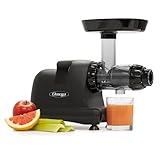
For what should you never put in a cold press juicer?, compare Ninja NeverClog JC151 and Omega All-in-One only after the ingredient, working-space, and cleanup requirements pass. The better choice is the model whose documented tradeoff fits the routine you will actually repeat.