Begin with the extraction path
Omega's verified U.S. catalog is no longer a choice between nearly identical horizontal slow juicers. It includes two horizontal specialist systems, three distinct vertical cold-press approaches, a large batch-hopper machine, and a two-speed centrifugal extractor. That range makes a brand-first purchase risky. Start with the produce used most often, the amount made on an ordinary day, and the work that happens after the motor stops. A greens-and-celery routine may justify a deliberate auger path. A family making several mixed-produce servings may benefit from staged hopper loading. A rushed apple-and-carrot routine may be better served by the centrifugal model. Eliminate the wrong mechanism before comparing wattage, finish, attachment count, or model age. No Omega badge can make a fast basket behave like a slow auger, make a tall machine fit beneath a cabinet, or make a large chamber convenient for one small glass.
J8006 All-in-One: horizontal control and extra functions
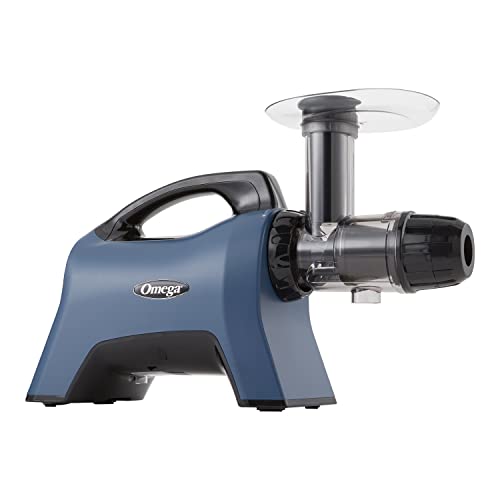
The current All-in-One J8006 family is the familiar horizontal Omega format. The verified model in this catalog runs at 80 RPM and combines a controlled feed path with supported nutrition-system functions beyond juice. It suits shoppers who repeatedly process greens, celery, herbs, ginger, and other compatible produce and will actually use the included non-juice capabilities. Its main tradeoff is length: allow room for the motor body, feed tray, pusher, juice cup, pulp vessel, front-end disassembly, and a drying area. Prepare the whole recipe before starting so deliberate feeding does not become a nuisance. Do not buy it for an accessory list that will remain boxed. It earns its place when horizontal ingredient control and multi-purpose use matter more than a self-feeding hopper, minimal counter depth, or the fastest possible firm-produce session.
MM1500BL: the celery-first specialist
The MM1500BL is a different horizontal decision because its verified configuration includes an adjustable celery end cap and a separate standard produce end cap. That gives frequent celery users a purpose-built setup without preventing supported mixed-produce work. The benefit is model-specific, not a promise that every stalk will feed without preparation or that clogs are impossible. Cut celery as the current instructions require, install the correct cap, feed steadily, watch the pulp outlet, and stop rather than forcing material if flow slows. The extra cap is worthwhile when celery is a repeated primary ingredient and the owner will learn the adjustment. For occasional celery inside varied recipes, the simpler J8006, Ninja JC151, or an Omega vertical may be easier to own. Like every horizontal model, MM1500BL requires counter length and prompt attention to its screen, outlet, auger, and cap before fibers dry.
Wide Mouth Vertical: compact width with active feeding
Omega's current Wide Mouth Vertical cold-press model is the narrow-counter option already represented here as Omega Compact Vertical. Its upright body saves horizontal space and its three-inch hopper can reduce some cutting, but vertical does not mean clearance-free or fully hands-off. Measure the maker's dimensions in the stated order, then add room to load produce, remove the hopper and bowl, place both containers, reach the controls, and carry wet parts to the sink. Upper cabinets can matter more than counter width. This format is persuasive when the kitchen can support height but not a long horizontal body, and when mixed produce and greens are more important than centrifugal speed. Compare it with VSJ843QS when slower operation and the latter's dual-edge auger matter, or with a batch-hopper model when repeated active feeding is the friction the household most wants to remove.
Pure Press VSJ843QS: 43-RPM vertical specialist
The verified silver Pure Press listing is VSJ843QS, part of Omega's VSJ843Q family. Omega documents 43-RPM operation, a dual-edge single auger, a no-drip juice tap with mixing function, and automatic pulp ejection. The maker lists celery, citrus, fruit, leafy greens, nut milks, vegetables, and wheatgrass among supported uses. Those are manufacturer-positioned capabilities, not independent yield guarantees. The 19.8-pound machine reduces horizontal sprawl but remains a substantial appliance that needs loading height and bowl-removal room. Choose it when a slow vertical path, greens support, and a controlled mixed-produce routine outweigh the convenience of a large self-feeding chamber. Follow the exact care instructions for the screen, seals, tap, and removable parts; a broad dishwasher statement should never be transferred from this model to another Omega. Confirm the QS finish and ASIN on the retailer listing rather than assuming every VSJ843 suffix is identical.
Time Saving versus Effortless JC2022
Omega's Time Saving hopper model and Effortless JC2022 both reduce continuous piece-by-piece loading, but their internal workflows are not interchangeable. The Time Saving model is the existing wide-hopper cold-press option in this catalog. JC2022 uses a two-liter, 68-ounce batch hopper and an all-in-one auger that Omega describes as requiring no separate juicing screen. It adds automatic forward-and-reverse detection, a 60-second add-more memory, and a five-minute timer. Those details make JC2022 the clearer choice when large mixed-produce batches and a simplified internal assembly solve real weekly friction. They do not make it a universal one-glass winner. A large chamber takes more space to load, wash, dry, and store. Use the maker's preparation limits even when the hopper accepts staged ingredients, and do not convert batch capacity into a continuous-duty or commercial-use claim.
High Speed XL: the centrifugal outlier
The OMJCHSXLCSV13 High Speed Extra-Large Chute model is Omega's current fast alternative. Omega documents a 3.3-inch chute, two speeds, a 1000-watt motor, stainless-steel filter, built-in drip stop, removable nine-cup pulp container, and 12,500-RPM operation. It is a centrifugal extractor, not a cold press. That distinction should drive the choice. It fits shoppers who want fast sessions built around compatible firm and high-moisture produce and who accept more operating sound, a different foam and separation profile, and basket brushing. The wider chute can reduce cutting for some produce, but it does not waive inspection, pit removal, trimming, or the manual's feed guidance. Choose a slow Omega instead when leafy greens, celery specialization, calmer operation, nut-milk functions, or a deliberate small-batch workflow matter more than speed. Never compare RPM across mechanisms as if the higher number proved better juice.
Capacity should match the median session
Hopper and container capacity matter only when they change the amount of work in the batch made most weeks. JC2022's 68-ounce chamber is attractive for several servings, but it can be excessive when the routine is one concentrated glass. A horizontal machine may appear slower to load yet waste less working space for a small greens recipe. A centrifugal pulp container may support a long firm-produce run, but the mesh basket still sets the cleanup burden. Write down the ordinary number of servings, the ingredients, and how often a second batch is actually made. Then compare pauses for loading, pulp clearing, vessel changes, and screen inspection. Manufacturer capacities describe vessels or chambers, not guaranteed finished-juice volume. Produce water content, ripeness, cutting, feed pace, screen condition, and retained pulp all affect the result. Buy for the median session rather than the largest imagined gathering.
Measure the full working station
Record stored width, depth, and height, then measure the appliance while working. A horizontal J8006 or MM1500 needs length for the feed tray and both output containers plus front access for disassembly. A vertical machine needs under-cabinet loading clearance and room to lift the hopper and bowl. A batch model needs lid or hopper access, a nearby produce bowl, and sink capacity for its larger chamber. The High Speed XL needs safe pusher clearance, access to its pulp container, and enough room to lift and brush the filter basket. Also map the electrical outlet, cutting board, trash or compost route, and drying rack. Weight matters if the machine must be moved every session. A format that technically fits while stored can still be frustrating to operate, and a powerful feature cannot compensate for a workstation that blocks the rest of the kitchen.
Compare cleanup by residue location
Different Omega mechanisms concentrate residue in different places. Horizontal augers collect fibers around the screen, end cap, pulp outlet, and front housing. Vertical systems add a bowl, seals, juice tap, and rotating surfaces that need inspection. Batch machines enlarge the loading chamber; JC2022's all-in-one auger removes a separate juicing screen from its documented design but does not remove the need to wash every food-contact path. The centrifugal model concentrates fine pulp in its stainless-steel filter and lid while its large pulp container holds bulk residue. Unplug as directed, disassemble only approved parts, clear loose pulp, rinse before fibers or pigment dry, brush mesh from both sides where applicable, and dry completely. Dishwasher claims are exact-model and exact-part facts. Use the current manual rather than transferring care instructions across the Omega name.
Separate maker specifications from outcomes
Omega's pages are appropriate sources for model numbers, mechanisms, RPM, power, weight, controls, named parts, supported functions, and warranty terms. They are also marketing pages. Statements about nutrient retention, oxidation, yield, taste, or health should not be treated as guaranteed household outcomes. JuicerPress uses documented specifications to explain workflow and avoids converting positioning into medical or universal performance claims. The same caution applies to apparent pulp dryness, foam, noise, and durability: ingredients, assembly, feed pace, surface stability, maintenance, and individual units can change the experience. A 15-year limited warranty on several slow models and a one-year limited warranty on the current High Speed model are terms to verify for the exact purchase, not predictions of service life. Read current warranty exclusions, seller status, voltage, and use-case coverage before buying.
Final Omega buying checklist
Choose slow auger or centrifugal, then identify the primary ingredient, ordinary servings, maximum acceptable prep, active-loading tolerance, screen or basket care, stored dimensions, operating clearance, machine weight, and the one feature that would materially improve the routine. For slow juicing, compare horizontal control, compact vertical shape, 43-RPM specialization, and batch-hopper convenience. For speed, compare High Speed XL with other centrifugal brands rather than assuming Omega's slow-juicing reputation transfers automatically. Open the exact review before Amazon. Confirm the ASIN, model suffix, finish, condition, seller, included accessories, voltage, current availability, current price, shipping, return terms, and warranty. JuicerPress does not sell, ship, warrant, refund, or process returns. The strongest choice should have one clear sentence explaining the repeated problem it solves and one honest sentence naming the tradeoff accepted.
Sources and further reading
Models relevant to this decision
As an Amazon Associate, we may earn from qualifying purchases.



Frequently asked questions
Are all Omega juicers cold press models?
No. The verified OMJCHSXLCSV13 High Speed Extra-Large Chute model is centrifugal. Choose the extraction mechanism before choosing the brand.
Which Omega is designed around celery?
The MM1500BL includes a dedicated adjustable celery end cap plus a separate standard produce end cap. It still requires model-approved preparation, feeding, and cleaning.
What is different about the JC2022?
Omega documents a two-liter, 68-ounce batch hopper, an all-in-one auger without a separate juicing screen, automatic forward and reverse detection, an add-more memory, and a five-minute timer.
Is VSJ843QS the same as every VSJ843 listing?
VSJ843Q identifies the family; the verified Amazon offer here is the silver VSJ843QS configuration. Confirm the exact suffix, finish, voltage, accessories, and ASIN before purchase.
Which Omega needs the least counter width?
A vertical model usually reduces horizontal length, but height, loading clearance, bowl removal, and drying space still matter. Measure the complete station.
Why are prices not shown?
Amazon prices, sellers, configurations, and availability can change. JuicerPress links to the current exact offer after explaining model fit.
Final verdict
For omega juicer guide: cold press, batch, vertical, and high-speed models, compare Omega MM1500BL Celery Juicer and Omega All-in-One only after the ingredient, working-space, and cleanup requirements pass. The better choice is the model whose documented tradeoff fits the routine you will actually repeat.